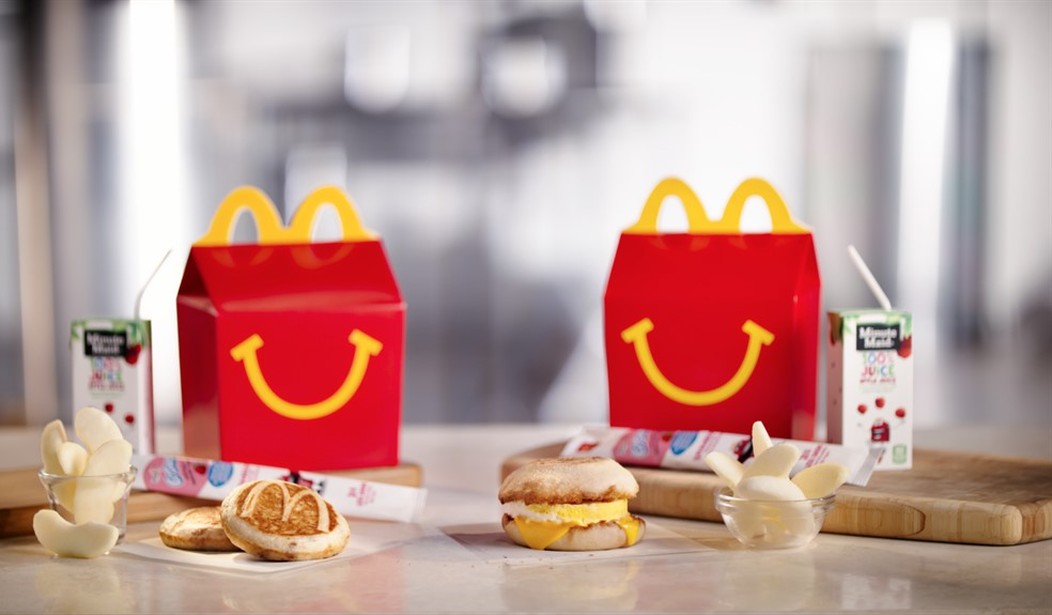
McDonald's announced a new CEO would be taking over today after its most recent quarterly report Left something to be desired.
McDonald’s Corp. named a new US president to bring “focus and urgency” to its home market, after the fast-food chain posted its slowest growth in over a year.
Sales at established US restaurants rose 0.8% in the second quarter, the company said Tuesday, its slowest growth since the start of 2025 and short of the average estimate of analysts polled by Bloomberg. While check sizes rose as customers bought on pricier items, this was partly offset by a decline in visits.
The chain named long-time executive Skye Anderson as president of its US business, replacing Joe Erlinger, who is leaving the company and has held the role for about seven years. Anderson has worked at McDonald’s for nearly 30 years, and was most recently chief operating officer for the US.
McDonald's says sales are looking good overseas in many markets but they are struggling here in the U.S., largely because of inflation.
Sales at McDonald’s softened last quarter as traffic to its U.S. restaurants slowed, the fast-food giant reported on Tuesday.
Consumers have been squeezed by inflation, particularly rising gasoline prices since the start of the war in Iran...
While executives at the restaurant chain acknowledged the “constrained consumer environment,” they also said much of the quarter’s weaker results were because of self-inflicted mistakes.
Those self-inflicted mistakes were largely about adhering to a corporate-planned value menu. Because most restaurants are franchises, the owners get to set the actual prices. So when the company moved ahead with the new value pricing only about two-thirds of restaurants followed.
Inconsistent pricing at its restaurants for a value program offering 10 items that each cost $3 or less was the biggest drag on sales. Only about two-thirds of the franchisees, which set the prices for food at the restaurants they own, followed the company’s suggested pricing, Mr. Kempczinski said.
He said the restaurant chain was communicating with franchisees to encourage them to adopt the suggested pricing structure. “With those folks that are not, you know, complying, as you would imagine, their business results are a lot softer than those who did comply,” Mr. Kempczinski said.
Here's where it begins to feel like the stories about this are tap-dancing around the real problem. If the value menu worked, why would one-third of restaurants refuse to adopt it? Are they just stubborn? Or was there perhaps another reason?
Maybe those franchises felt they couldn't afford to discount 10 items to $3 because they were worried about covering expenses. In other words, this isn't just about the price of gas being up in the past six months. This is about what has been happening with prices at these restaurants over the past several years. The Washington Post did a good story about this last May:
When Nick Martinez and his family wanted a quick, inexpensive and reliable meal, McDonald’s used to be their go-to choice.
Now it costs so much, he said, that he lets his 5-year-old son pick from a range of spots near their home in Colton, California, that might have seemed too pricey in the past.
“McDonald’s isn’t the best value anymore,” said Martinez, 50, who has three children. “People are saying, ‘Well, if I’m going to pay $5 for a fry, I’ll just go to this place over here.’”
This is exactly what has happened in my house. I took my kids to McDonald’s once a week for years when they were little, but in the past two years or so the prices have gone up so much that it's no longer a bargain. Of course I live in California where the situation is especially bad thanks to a $20 minimum wage for fast food employees. But taking two people to McDonald's for lunch now costs at least $30. For the same amount we could go to any number of fast casual restaurants like Cafe Rio, Panda Express, Chipotle, or any number of other burger restaurants.
Simply put, McDonald's used to be relatively cheap which made up for a lot. These days it's not cheap at all and there are lots of competitors in the same price range. McDonald's own data backs that up.
Generally speaking, the price gap between fast-food, fast-casual and sit-down restaurants has blurred, said Sara Senatore, an analyst at Bank of America. That makes it harder to justify spending more than $10 at McDonald’s when a few extra dollars can buy meals at Wingstop, Shake Shack or other fast-casual restaurants that are perceived as higher quality, she said.
The average price of a McDonald’s menu item increased 40 percent from 2019 to 2024, which the company says tracks with the rise in its costs.
Here's a McDonald's FAQ explaining that their prices rose to match the 40 percent jump in costs.
McDonald’s overall, five-year price increases are closely connected to the increase of costs to run restaurants, which have gone up. This includes increases in restaurant crew salaries (up ~40% since 2019, from data accessible) and food/paper costs, also known as “cost of goods” (up ~35% since 2019).
Otherwise said, the average “input costs” (salaries, food and paper) are up ~40% over the past five years. The average price of McDonald's menu items is up ~40% over the past five years.
Notice what's driving this is "increases in restaurant crew salaries." So what's probably happening here is we're seeing the results of all those "Fight for $15" campaigns that have played out in various places. Those were considered a big win by the left.
On November 29, 2012, a group of 200 fast-food workers in New York City—fed up with low pay and roadblocks to organizing—walked out of their jobs demanding a $15 hourly wage and a union. At the time, The New York Times described the strike as “the biggest wave of job actions in the history of America’s fast-food industry.”
That “biggest wave of job actions,” led by Black workers and other workers of color, would not stay contained to the fast-food industry for long. Over the course of the decade that followed, the Fight for $15—as the movement inspired by the strikes would come to be known—spread from coast to coast, animating workers across industries to join the demand for higher wages.
To date, 29 states and nearly five dozen cities and counties have raised their wage floors since 2012—many to $15 an hour or more. In addition, employers of all sizes—including some of the world’s largest corporations employing tens of millions of workers—have been inspired or compelled to raise their pay scales.
They got what they wanted and for a year or so after the pandemic sales went up. But with the Biden-era inflation on top of the rising labor costs, now the company is struggling. The result is that McDonald's top selling point (cheap, tasty food) is no longer a reality. At least that's how some see it.
During the 2008 financial crisis, McDonald’s $1 offerings helped the chain keep customers, but now that its signature sandwiches can cost more than $5 and combo meals have exceeded $15 at some franchises, the company’s food no longer feels like a deal compared with competitors, Nunes said.
The problem here goes way beyond higher gas prices this summer. Too few news outlets reporting on the slow sales this quarter seem interested in looking back at how we wound up here.
Editor’s Note: Thanks to President Trump’s leadership and bold policies, America’s economy is back on track.
Help us continue to report on the president’s economic successes and combat the lies of the Democrats. Join HotAir VIP and use promo code FIGHT to receive 60% off your membership.







Join the conversation as a VIP Member