








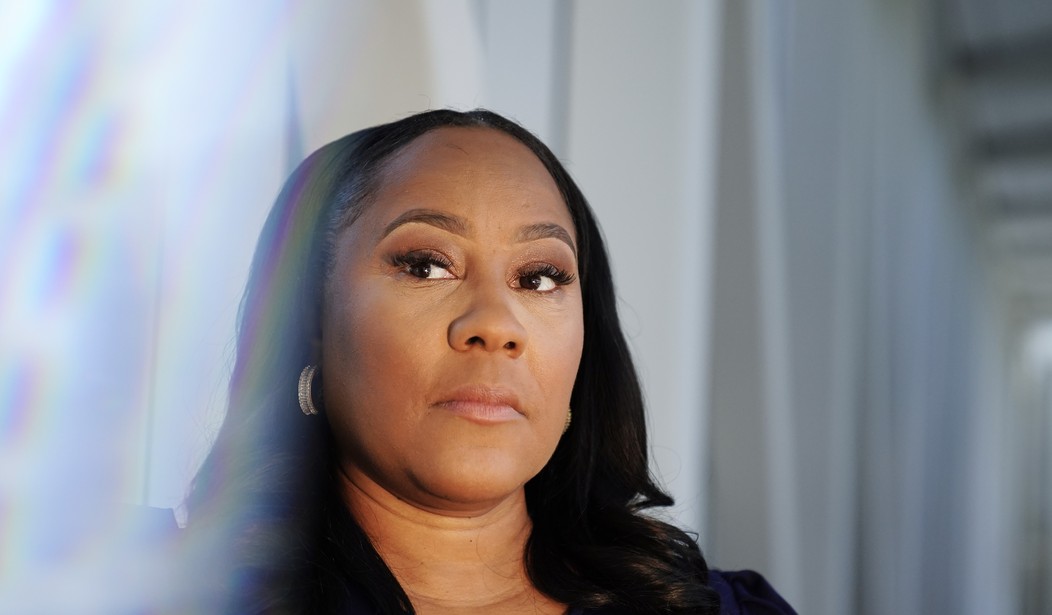
Yesterday a federal judge in Georgia recused herself from a case involving voters rolls after it was established that she'd attended a political event in support of Fani Willis.
The Justice Department sought to remove U.S. District Judge Eleanor Ross from the case, citing her reported attendance at an event for Fulton County District Attorney Fani Willis, who prosecuted President Donald Trump. Ross on Tuesday filed an order recusing herself, writing that she was doing so “out of an abundance of caution for the potential perception of bias.”
The Justice Department had sued Georgia Secretary of State Brad Raffensperger seeking an unredacted statewide voter list, and Ross was presiding over that case.
“Both the Trump administration’s present and Willis’s past efforts have become heavily polarized,” Ross wrote, explaining that she “cannot discount” that an objective observer might interpret her attendance at an event sponsored by Willis’ campaign as support for the district attorney’s position, even if she only went to see former colleagues.
Judge Ross was appointed by President Obama in 2014 and her recusal was considered a win for the Trump administration in the case. But it turns out her attendance at events for Fani Willis are really the least of her problems. Last week an investigation concluded that Judge Ross had repeatedly been having sex in her office with a police officer.
The clerks could sometimes hear the unmistakable sounds of sex from behind the door.
They chalked it up as one of the burdens of working for Judge Ross, who routinely rubber stamped their draft orders and added little else before issuing them as rulings. But the clerks in the Atlanta courthouse felt helpless: Do you report your married boss, a federal judge no less, for having a clandestine in-office affair with a law enforcement officer?
One day last year, a clerk did exactly that.
This led to an investigation directed by the chief judge. Initially when she was confronted, Judge Ross lied to investigators.
The committee also found that Judge Ross had initially lied to her fellow judges by blaming the clerk who reported her misconduct, suggesting that he was retaliating against her by making “outrageous” and “baseless” claims.
The findings drew scorn in the legal world, but it was, perhaps, the punishment she received — a private reprimand and an agreement to not be promoted to chief judge of her district court — that drew even more ire. It sparked questions of accountability in the justice system and concerns that federal judges with lifetime appointments can misbehave with little consequence, all while doling out serious sanctions to those who appear before them.
Put it this way, if a CEO had carried on this way with someone they worked with, it would probably considered serious enough to have them forced out. And if someone had come into Judge Ross's court and lied under oath the way she lied to investigators, that person could face felony charges. But Judge Ross got nothing more than a minor slap on the wrist. And all of that is on top of her apparent disinterest in actually doing her job.
While Judge Ross was engaged on her criminal cases, the clerks — often fresh out of law school — told investigators that she largely let them decide how to rule on key motions in lawsuits. It was not unusual to go weeks without hearing much from her except for a brief email — “Please docket.” — a few minutes after they sent her a draft order, three clerks told The Times.
They estimated that she provided edits on roughly 5 percent of the civil orders that they drafted in her name, and even then mostly just for grammar or typos.
In addition to the private reprimand, Judge Ross was required to write apology letters to six of her clerks. She whiffed on that too.
The letters she sent, dated May 27, were three sentences long and identical.
“Thank you for your contributions to our court during your clerkship,” Judge Ross wrote, according to a copy obtained by The Times. “I convey my deepest apology for not taking steps to ensure that it was a more positive experience. I wish you all the best in your future legal endeavors and in life.”
The three former clerks who spoke to The Times said that they viewed the letter as offensively vague.
The apology was so generic that the chief judge sent Judge Ross a letter suggesting she could be investigated again for failing to comply with the agreement to write the letters. In response, Judge Ross sent out a second round of apology letters.
A federal judge who was reprimanded for having a yearslong affair with a police commander in her court chambers, among other ethical lapses, wrote a second round of apology letters to her former clerks this week, saying her “offensive conduct” was “patently wrong.”
“I have no excuse and immensely regret my behavior,” wrote Judge Eleanor Ross, a veteran jurist in federal court in Atlanta...
“My initial letter was entirely deficient, as I did not take full accountability for my actions, and I failed to give you the apology that you deserve,” Judge Ross wrote.
And despite all of that, there's no indication that Judge Ross plans to step down from her job or will be asked to leave. Two Republicans have called for her impeachment but as of today, she's still a federal judge. It makes you wonder if there's anything a judge could do on the clock that would result in serious repercussions beyond a stern warning.
Editor's Note: Unelected federal judges are hijacking President Trump's agenda and insulting the will of the people.
Help us expose out-of-control judges dead set on halting President Trump's mandate for change. Join HotAir VIP and use promo code FIGHT to receive 60% off your membership.


Join the Conversation
VIP members get the ability to comment on articles.