
The hardest part of writing columns these days isn't determining what happened and why. The biggest obstacle is navigating through the blizzard of propaganda, misreporting, and absolute falsehoods being told. On the macro level, if lies were people, the Iranian regime would be China. And that's saying something, since no one can believe a word that comes out of Beijing.
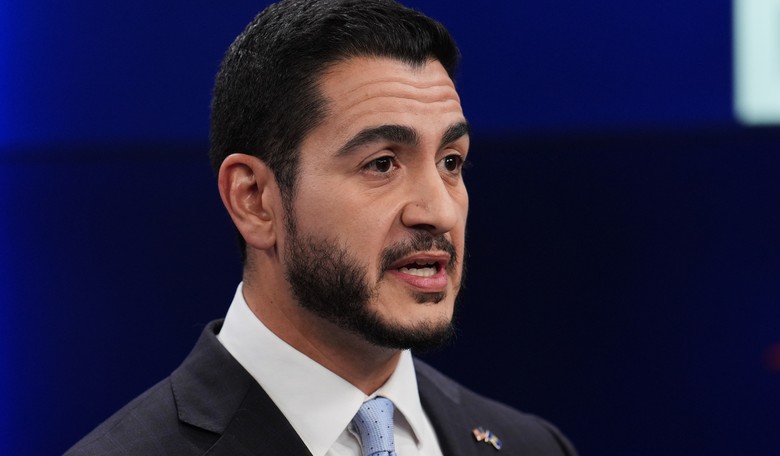
But on the individual level, at least in regards to the American midterm election cycle, with all of the contenders vying for top prevaricator, the diminutive "doc" from Detroit, Abdul El-Sayed, is the runaway winner.
Back in 2018 when El-Sayed was running for governor of the Wolverine State, he gave this answer several times as an explanation for why his parents named him the way they did.
2018. While running for Governor, Abdul El-Sayed says that his parents chose the name Abdul because Paula Abdul was popular at the time. https://t.co/MyS5EDVpwU
— MAZE (@mazemoore) October 18, 2026
In 1984, Abdulrahman Mohamed El-Sayed was born to Mohamed El-Sayed, an Egyptian political asylum seeker who held leadership positions both in the Council on American-Islamic Relations and the Islamic Society of North America. Both entities were unindicted co-conspirators in the Holy Land Foundation terrorism suit that busted up $12 million being funneled to Hamas to kill Jews. El-Sayed's mother, Fatten Elkomy, who began working for the Muslim Brotherhood in Egypt during her collegiate years before expanding that mission work in the United States to provide funding to Osama bin Laden and al Qaeda as well as to Hamas. Why does this matter? Both parents are deeply antisemitic.
Paula Abdul was born in 1962 as a Syrian Jew. She had her Bat Mitzvah in 2013. In 1984, she was one of the Laker girls at the Fabulous Forum in Inglewood, California. That was right in the middle of the Showtime era — Magic Johnson, Kareem Abdul-Jabaar, James Worthy, Michael Cooper, Byron Scott, and A.C. Green. I loved the rivalry for much of the 80s between the Lakers and the Celtics. I probably went to 50 games in my teens and 20's. I no doubt saw her dance on the sideline several times, and, like the El-Sayed family, had no clue who she was, because it wasn't until young El-Sayed was four-years-old that Paula's debut album was released, sparking her first number one hit. The chance that his Jew-hating mom and dad named him after a unknown Jewish girl is absurd.
Over the years, he morphed the meaning of his name into being a "servant leader". That's closer, but still disingenuous. His name, Abdulrahman Mohamed El-Sayed, literally translates as "Servant of the Prophet Muhammad, the Master". He had to tone that down a bit for public consumption.
Of all the lies remnants of the Iranian regime tell, the most consistent is that the Strait of Hormuz is closed. A day doesn't go by without missives, complete with AI-generated images and videos to allegedly prove their point, that tankers are hitting Iranian mines in the Strait and sinking, or that drones are striking ships at will and sinking them, too.
CENTCOM Admiral Brad Cooper has a different story to tell, one backed up by the men and women of the United States Military and the scoreboard of oil leaving the Strait of Hormuz.
Update from CENTCOM Commander: https://t.co/YR9yHJ5IQB
— U.S. Central Command (@CENTCOM) October 16, 2026
Yes, Iran is doing its level best with what they have left to harass shipping in the Strait. But oil, refined products, and cargo are transiting every day with increasing frequency. Remember that Saudi Arabian East-West pipeline that got hit by an Iranian-backed Shia militia group in Iraq last month? Not only is the pipeline operational once again far sooner than doomers predicted, it's moving more oil than before the attack. 5.8 million barrels bypassed Hormuz yesterday alone. The Kingdom produced almost 11 million barrels a day by the beginning of the month, exporting nearly 8 million barrels of it, refining the rest for their own use. The Strait is absolutely open. It might be like the Wild West at times, and the Wells Fargo Stagecoach gets a shot taken at it now and then, but the mail is being delivered.
Iran would have you believe that American forces have retreated to more than 700 kilometers away. Except they're still close enough to do this to Iranian boats pretending to be the Iranian Navy.
On Oct. 6, U.S. forces destroyed an Iranian-affiliated dhow conducting surveillance and targeting U.S. Navy ships in the Gulf of Oman. Over the past seven months, Iran's Islamic Revolutionary Guard Corps has continued to indiscriminately target thousands of civilian mariners transiting regional waters in addition to U.S. Navy warships. Crew members were safely removed prior to destruction of the dhow. Repatriation efforts are ongoing.
— U.S. Central Command (@CENTCOM) October 14, 2026
As for how the regime in Tehran is actually holding up, not taking what they're saying online at face value, let's take a look inside Iran...or in this case, under Iran.
🔴 فوری-مهم: جلسه هیئت دولت امروز در پناهگاهی زیر زمینی برگزار شد مقایسه تصاویر برگزاری جلسه هیئت دولت مسعود پزشکیان با تصاویر قبلی نشان میدهد که جلسه عصر امروز در مکانی جدید و در تونلی زیر زمینی برگزار شده است. شک نکنید آنها که باید بدانند از مکان دقیق این پناهگاه زیر زمینی اطلاع دارند. چهارشنبه ۲۲ مهرماه ۲۵۸۵ #شبنامه @Rppress0
— شبنامه (@Rppress0) October 14, 2026
President Trump last week said he would not conduct kinetic operations against Iran until after the midterms. But after that, he promised, all bets are off. The regime doesn't trust him. They're holding meetings underground just in case. Why? They have no radar to warn them against American bombers on their way. And even if they did have that warning, they've got nothing on the ground in the way of air defenses to do anything about it.
Former senior members of the regime are speaking openly that life, even for those in government, cannot be sustained at this rate much longer.
A senior Islamic Republic official admits that the regime cannot defeat the United States in a war and that Iran is bearing the overwhelming losses. Gholamhossein Karbaschi, a former Tehran mayor and prominent reformist figure, said the Islamic Republic cannot “father America,” that the damage inflicted on the United States is incomparable to the damage suffered by Iran and its people, and that the two countries’ power and capacity cannot be compared. That admission destroys decades of resistance propaganda with one basic truth. The Islamic Republic is fighting a superpower with an economy nearly 100 times larger, a military budget exceeding $900 billion and global military capabilities Iran cannot approach. The United States operates roughly 13,000 military aircraft, hundreds of stealth fighters and bombers, 11 aircraft carriers and a global network of bases and logistics. The Islamic Republic has roughly 550 mostly aging aircraft, no fifth-generation fighters, no strategic bombers and no aircraft carriers. Iran can still impose regional costs through missiles, drones, the Strait of Hormuz and its remaining proxies. But asymmetric disruption is not strategic parity. It cannot protect Iran’s infrastructure, population or economy from a prolonged high-intensity confrontation. The results are already visible. The rial has collapsed, inflation has reached devastating levels, oil revenue has been strangled and Iranian industry is contracting. The United States absorbs the cost of operations through a multitrillion-dollar economy. Iranian families absorb it through lost savings, food inflation, unemployment and deteriorating public services. Mohsen Rezaei and other regime propagandists continue claiming that the United States lost the military war and will lose the economic war. Karbaschi has now admitted what those slogans conceal. The damage is not remotely comparable, and Iran lacks the capacity to sustain this confrontation on equal terms. Karbaschi’s answer is an agreement. But reformists helped preserve the same system that created the crisis. They repeatedly softened its language while accepting its nuclear brinkmanship, proxy warfare and hostility toward the United States. The Islamic Republic spent decades telling Iranians that sacrifice would make the regime stronger and bring America to its knees. Instead, it exhausted Iran while leaving the United States fundamentally intact. The regime did not build strategic equality. It built an ideological confrontation in which its own people were always going to pay the greater price.
— The Iran Watcher (@TheIranWatcher) October 14, 2026
Another appeared on television and said the unthinkable — Iran can't do to the Americans what the regime claims it can.
بازم پروژه دارم براتون کرباسچی: ما نمیتوانیم پدر آمریکا را دربیاوریم هر روز کارشناس بیاورید و بگویند ما داریم پدر آمریکا را درمیآوریم؛ اما واقعیت این است که ما نمیتوانیم چنین کاری بکنیم. آسیبهایی که ما به آمریکا وارد کردهایم، با خسارتهایی که کشور و مردم خودمان متحمل شدهاند، قابل مقایسه نیست. اساساً توان و ظرفیت ما با آمریکا قابل مقایسه نیست. دارن عرزشی ها رو برای قمبل قهرمانانه آماده میکنن
— عمو سیروس (@cyrus_shah_) October 14, 2026
This guy was one of the regime's biggest war hawks against the U.S. Now? He wants out from under it before they're all killed.
اظهارات جدید سعید جلیلی: سایۀ جنگ باید از سر کشور برداشته شود آنچه باید در برنامۀ کشور قرار بگیرد، این است که نهتنها به جنگ پایان داده شود، بلکه سایۀ جنگ نیز از سر کشور برداشته شود. ظاهرا سعید خان هم از خونخواهی رهبر شهید کوتاه اومد😂😂😂😂 https://t.co/1GCa9wM0Z3
— محمود ایرانی (@mahmoud_iranii) October 14, 2026
Puppet Iranian President Masoud Pezeshkian, in a speech meant to shame ordinary Iranians for not volunteering to be cannon fodder against the Americans and Israelis, admitted that the Iranians lost 1,500 IRGC forces that worked the missile launch sites — fixed and portable, all over Iran. So when the regime boasts on X that they've retained all of their missile production and capacity, here's 1,500 reasons why you shouldn't believe them.
At a university in Isfahan, signs claiming the regime is collapsing are going up everywhere.
Protest notes saying that “this regime is collapsing” were posted on railings at the University of Isfahan in central Iran, a video sent to Iran International shows. “Student brothers! This regime is collapsing. The days are hard, but with a little patience, perseverance and resilience everything will change. They are on their way out,” the notes read.
— Iran International English (@IranIntl_En) October 15, 2026
The Artesh, Iran's regular army, is increasingly unhappy with the regime. And keep in mind, they also have guns.
WATCH: Iranian soldier exposes hunger and military shortages https://t.co/CO9gK5vP4C
— Celisa 🇺🇸🇮🇱🕎✡️🎗️🧡#🟦 (@BubbeCelisa) October 16, 2026
For many Iranians, they're beyond depressed and fearful about what the future holds for them under this ruthless regime. But while telling the rest of the world how utterly gutted the Iranian economy is after withering economic sanctions, they have to laugh and make jokes out of it, because if they're seen complaining, they'll be captured and killed.
In Iran, youth joke: "A sausage and two eggs = 500,000 Toman. We're starving." "Why are you laughing then?" "If I don't smile about it, they will execute me." In Iran, you must be happy about your own hunger, or the regime kills you. This dark humor is their only way to protest. They are telling the world: In the Islamic Republic, even being sad about not being able to afford food can get you labeled as a protester and rioter and sentenced to death.
— The Iranian (@JustAnIranianIr) October 17, 2026
Protests inside Iran are growing. Some of them are protests in the classical sense of the word, meaning non-violent.
Protests are erupting across Iran over high inflation as well as shortage of goods and services. Pensioners on fixed income are struggling to buy food and medicine. Their chant: “Our enemy is right here in Iran, not in America.” https://t.co/TMY7XsoYdq
— S.L. Kanthan (@Kanthan2030) October 19, 2026
Steel retirees held a protest march in Isfahan on Sunday. The demonstration highlighted their grievances and demands. #IranObservatory #Iran https://t.co/MiHLEgggxj
— Iran Observatory (@IRObservatory) October 18, 2026
Iran’s regime is increasingly governing by emergency: retirees protested across multiple cities, the Assembly of Experts urged nightly rallies to continue until “full security” is restored, Tehran lost 7,000 students, 70,000 nurses are reportedly out of the profession, and #oil exports remain near zero. https://t.co/IUSY7PL2lV
— NCRI-FAC (@iran_policy) October 18, 2026
These are in provinces all over Iran. There are also protests of another sort growing in western, northern, and eastern Iranian provinces. To the west, out of fear that the Kurds are becoming too big a threat, the IRGC began attacking them with one-way drones, inflicting damage. The Kurds, however, are reportedly resisting, may have some flying toys of their own, and are fighting back in the mountains.
NOW: The Iranian Kurdish separatist group PJAK is reportedly attacking several towns in Kermanshah Province, western Iran, using one-way attack drones. https://t.co/9wru8MwMm0
— Conflict Radar (@Conflict_Radar) October 16, 2026
Up north, another IRGC cleric was killed by what's being called "a bladed weapon".
A cleric in northern Iran was killed at his home in Sari, the IRGC-linked Tasnim news agency reported on Thursday. Tasnim identified him as Yasser Taheri, a member of the clerical association in Mazandaran province and prayer leader at the Hassan Askari mosque in Sari’s Rahband neighborhood. Initial reports indicated he was killed with a bladed weapon, Tasnim said. The motive was not immediately known. Ali Abbasi, head of the Mazandaran forensic medicine department, said investigators were examining the scene and that further details on the cause and circumstances of death would be released after the body was examined. https://t.co/qBRMUzq412
— Iran International English (@IranIntl_En) October 15, 2026
That's three in about a month's period of time. And in the southeast, the Baluchistan tribes are escalating, with a mounting body count of IRGC in their wake.
🔴 Iran Update: There is an absolute IRGC bloodbath happening in the Iranian region of Sistan & Balochestan. Assassinations everywhere and almost daily. I haven't spoken much about this particular battlefield. As an Iranian nationalist I will never approve of separatism, nor will I blindly praise the JMM militant group. I don't know this group, and as of writing this I don't trust them either. They claim to fight for all of Iran after merging several militant groups together, but at least one faction among them are historically Baloch separatists. They are also very conservative sunni muslims. Therefore, I won't boost their videos or statements for the time being. Until I know where the Shah and his team stand regarding this group and where they stand regarding him, I won't give them my attention. However, I can speak about what the last few weeks of fighting could mean for Iran: Regardless of what I think of JMM, their targets have Iranian blood on their hands and undoubtedly deserve it. IRGC thugs, basijis, regime linked clerics and foreign proxy terrorists are all being killed at a growing rate. Police stations, bases and checkpoints are raided. Patrols come under attack as they drive through cities. There's been at least one case of fighting reaching the Kerman region. Today, a female basiji commander was assassinated in front of her house. Yesterday, dozens of Afghan proxy terrorists were wiped out. Last month, a regime linked sunni cleric was shot dead. Many of the assassinations are very high ranking. I don't know what suddenly changed, but it's gotten very deadly and dangerous to be an islamic regime figure in S&B. What does all of this mean? 1) The islamic regime is losing control. 2) Regime thugs used to feel safe and protected. Now they don't. Psychologically this will do serious damage, especially to lower ranking demoralised basijis who aren't receiving their blood money salaries anymore due to sanctions. 3) If this keeps up, the islamic regime will have to send large forces from other regions to go fight in S&B. I shouldn't have to explain that this will benefit the rest of Iran when the next uprising happens. Thousands of IRGC terrorists forced to fight in the South East means thousands fewer IRGC to oppress Iranians in other provinces. It means evening out the playing field. Again, this is an analysis, not an endorsement of JMM. They still need to clarify their stance on Iran's territorial integrity, their stance on the Shah, and their stance on separatism and islamism. We also need to know what their actual goal is once the islamic regime is overthrown. Until then, as far as I'm concerned, the IRGC is getting killed in big numbers from within Iran and seemingly without any outside assistance, and that's what I will focus on. What's happening in S&B is going to have huge consequences for Iran in the coming months, and everyone should pay attention.
— 𝐍𝐢𝐨𝐡 𝐁𝐞𝐫𝐠 🇮🇷 ✡︎ (@NiohBerg) October 14, 2026
Nioh is a monarchist. She wants Reza Pahlavi to return to Tehran and rule as the Persian king, so she's not happy about bits of the country splintering off to different factions. She's torn, however, because chaos and dead IRGC around the edges of the country could easily spread to the interior, presenting Iranians with an opportunity to topple the regime.
A commander of a women’s Basij unit was shot dead outside her home in Mehrastan County in southeastern Iran’s Sistan-Baluchestan province, the IRGC-linked Tasnim news agency reported on Wednesday. The outlet attributed the shooting to what it described as militants linked to the United States and Israel. It did not immediately identify any group as responsible or provide further details about the attack. https://t.co/n0PEoAGkiD
— Iran International English (@IranIntl_En) October 14, 2026
This was one of the leaders of the women's garb police. It appears that locals had enough with hijab/burqa cops.
Iranian Balochi forces say they inflicted heavy losses on the IRGC and its Afghan Shia Fatemiyoun fighters before issuing a unifying message to the people of Iran. The People’s Fighters Front claims more than 20 regime fighters, most of them Fatemiyoun members, were killed alongside field commander Yaser Baqi during clashes in Taftan. It also reported separate operations against IRGC and Fatemiyoun forces near Zahedan and Chabahar. The group says three of its own Iranian fighters were killed while helping others withdraw to safety. Its broader message was unmistakably national. It called Iran “our beloved homeland” and said its struggle is for all Iranians, not only Balochistan. The statement called on the Iranian nation to unite and free itself and Iran from 47 years of oppression under the Islamic Republic’s delusional, sectarian rule of velayat-e faqih.
— The Iran Watcher (@TheIranWatcher) October 13, 2026
While Iran continues to deteriorate, its only remaining ally in the region, the Houthis in Yemen, have their hands full of Yemeni armed forces, Saudi Arabian air strikes, and a growing coalition against them that may soon include not just Pakistan and Turkey, but also Syria and Egypt.
NEW: Egypt enters the Saudia Arabia - Houthi conflict. President El-Sisi and his National Defence Council has approved a troop deployment. This morning, at least 2 Egyptian C-130H military transport aircraft landed at King Fahd Air Base in Taif, Saudi Arabia. https://t.co/4ISKNzVJ5h
— Open Source Intel (@Osint613) October 18, 2026
Fighting in Yemen was pretty intense from the north to the south this past week, and continues today. Even the Red Sea Coast, which has largely been reclaimed from Houthi control, still saw a lot of mop up operations to root out remnant Houthi terrorists.
Mohammed Ali Mohsen, a Houthi field commander who issued threats from Bab al-Mandab weeks ago, was killed days ago on the #Taiz front. #Yemen https://t.co/SZrb6ObTCU
— Ali Al-Sakani | علي السكني (@Alsakaniali) October 18, 2026
This chap was one of the faces you saw from Bab al-Mandab in September when the Houthis blitzed the coast and took Mokha and the airport. You won't see him anywhere, because he was killed after fleeing the coast up into the hills of Taiz this past weekend.
Khazzan Hill and the camps around it at Bab al-Mandab have been taken by the Southern Giants forces with Arab Coalition support. Dozens of Houthi fighters were killed, including a military commander, and others were captured. Hundreds fled toward the sea. https://t.co/OUcB5Av3mL
— Open Source Intel (@Osint613) October 18, 2026
The Giant Brigades have demonstrated for months that you underestimate them to your own peril.
Up in the north, in the desert terrain of Mariz, Yemeni and Saudi forces kept up their whack-a-Houthi campaign relentlessly.
More footage from army media shows fpv drones hitting Houthi fighters and vehicles in #Marib, while atgms destroyed a Houthi pickup and armored vehicle eastern al-Hazm city in Al-Jawf Governorate. #Yemen https://t.co/X6ya8CXJlP
— Ali Al-Sakani | علي السكني (@Alsakaniali) October 18, 2026
Govt FPV drones hunted down Houthi fighters north of #Marib today, per army media. #Yemen https://t.co/TblfZmJQD3
— Ali Al-Sakani | علي السكني (@Alsakaniali) October 18, 2026
Yemeni army drones struck Houthi vehicles, troop concentrations and positions across northern and southern #Marib Governorate, per army media. https://t.co/eSB9us3UNu
— Ali Al-Sakani | علي السكني (@Alsakaniali) October 17, 2026
The carnage is pretty extensive all over Yemen. The Houthis are gradually losing the war of attrition, with over 700 killed, including several senior officers, in just three days last week.
HOUTHI KIA TALLY, 792 NAMED FATALITIES Reporting period: 13 July - 15 October 2026 War of Attrition: This updated tally incorporates additional names from Houthi-affiliated funeral announcements reported through 15 October 2026. Names and military ranks are drawn from Houthi-affiliated funeral reports, including @alsyasiah and @Almasirah_YE. The tally is based on reported funerals and is not an independently verified count of battlefield deaths. By Governorate Sana'a: 159 Dhamar: 126 Hajjah: 112 Amran: 106 Hodeidah: 84 Saada: 41 Ibb: 35 Taiz: 46 al-Mahwit: 18 al-Dhale: 17 Raymah: 22 al-Bayda: 12 Location unconfirmed: 9 al-Jawf: 2 Marib: 3 Basha باشا (@BashaReport) October 15, 2026
But even with a large loss of fighters, Houthis still have missile and drone capabilities, and enough fighters high on khat to keep going. Last week, in the Yemen back-up capital of Aden on the southern coast, the presidential palace compound was struck.
The Houthis have reportedly launched multiple waves of ballistic missiles and drones targeting the Al-Maashiq Presidential Palace compound in Aden. The Prime Minister @Shaya_Zindani is safe and unharmed, but casualties have been reported. A second wave of attacks targeted the Al-Bureiqa district of Aden. These attacks appear to signal the beginning of a broader Houthi military campaign against Aden. For months, Houthi leaders have repeatedly assured southern Yemenis that they have no intention of advancing into southern Yemen. Yet their ongoing military operations in Lahj, followed by today’s strikes on Aden and the seat of Yemen’s internationally recognized government, suggest otherwise. The attacks provide the clearest public indication yet that Aden itself is now a Houthi military objective.
— Basha باشا (@BashaReport) October 15, 2026
And Yemen has lost one of its biggest heroes.
Brig. Gen. Ahmed Mohammed Buhaibah, chief of staff of the Bayhan Military Axis’s 26th Infantry Brigade and brother of the axis commander, was killed in fighting with Iran-backed Houthis south of #Marib today. #Yemen https://t.co/LX999aJbdg
— Ali Al-Sakani | علي السكني (@Alsakaniali) October 16, 2026
The most intense fighting, however, remains in the high country of Taiz. The third-biggest city in Yemen is the gateway to the Red Sea coast, and envelops the biggest supply line to Aden in the south. The Houthis desperately want to capture and hold that high ground and cut off government forces. The second they blow something up and take a hill, they play mind games with the population that Taiz has fallen. Except the locals, aiding and assisting Yemeni coalition forces, keep reclaiming the same ground after killing Houthis that just took it that morning. This back and forth has been rinsed and repeated for a couple weeks.
Houthis are shelling civilian homes with mortar rounds in the Sabr Mountain area, south of Taiz city, Yemen. Local resistance fighters continue to put up fierce resistance despite being outnumbered and outgunned by Houthi forces. Their city and surrounding areas have been under siege for nearly two weeks, yet they continue to defend their homes and communities.
— Basha باشا (@BashaReport) October 16, 2026
Saudi-led coalition warplanes reportedly carried out five airstrikes moments ago against Houthi positions near Jabal Han, Hadaiq al-Saleh, and al-Maqbabah, west of Taiz city, as well as targets in Sanamat village and al-Aqroud in southern Taiz governorate. https://t.co/2Z1LjK622G
— Basha باشا (@BashaReport) October 16, 2026
Locals in Taiz are an active participant in this war against the Houthis. And even when things look bleak, like 20 of them getting captured, they vow to continue fighting.
Residents torched a Houthi vehicle used to broadcast sectarian speeches and chants in Qadas, south of #Taiz. The Houthis retaliated by abducting around 20 civilians, according to local sources. #Yemem https://t.co/Wj5eEJbByV
— Ali Al-Sakani | علي السكني (@Alsakaniali) October 18, 2026
War in #Yemen SITREP | Day 13 of the Taiz Siege | Fighting continues across Taiz as government forces @axistaiz and popular resistance fighters hold their ground against sustained Houthi offensives. Despite nearly two weeks of siege, heavy shelling, and repeated attacks on the city's defenses, resistance forces continue fighting with limited resources. A teacher fighting alongside the popular resistance on Jabal Han, along the western approaches to Taiz city, published a video from the front lines vowing to continue resisting the Houthis. The footage reflects the determination of local fighters who have joined the defense of the city despite increasingly difficult battlefield conditions. Government forces and popular resistance fighters continue engaging Houthi forces across multiple fronts in and around Taiz city. The Yemeni Armed Forces @Yem_army_media released footage showing drone strikes against Houthi troop concentrations near Jawlat al-Qasr in Taiz city, in al-Nawazil in Jabal Habashi district, and along the al-Dhabab front west of the city. Additional footage reportedly documents strikes against Houthi movement routes, staging positions, and troop concentrations across the Taiz battlefront. In southern Taiz, government forces supported by the popular resistance reportedly inflicted casualties on Houthi fighters in an ambush in al-Aqrud. Heavy fighting was also reported in al-Qahfah village along the same front, where government forces continue resisting Houthi attempts to advance. Saudi-led coalition aircraft reportedly conducted multiple airstrikes against Houthi positions and reinforcements across Taiz governorate. Three strikes targeted Houthi positions in al-Shamayatayn district, while additional strikes hit Houthi positions and movements on the outskirts of al-Wazi'iyah. Further airstrikes reportedly targeted Houthi reinforcements in Najd Qasim, west of Taiz, while three additional strikes hit positions in Dhi al-Birh in al-Misrakh district, south of the city. The strikes appear intended to disrupt Houthi reinforcement routes and support government forces defending the city's western and southern approaches. Separately, a field source reported that Abu al-Fadl al-Hadrami, identified as the head of Houthi ballistic missile and drone operations, was killed in Taiz. His reported death and position within the Houthi command structure have not yet been independently verified. The continued fighting demonstrates that Taiz city has not fallen despite repeated Houthi claims of major territorial gains. Government forces and popular resistance fighters remain engaged across the western and southern fronts, while coalition aircraft and Yemeni military drones continue targeting Houthi concentrations and reinforcement routes. The resistance is fighting under increasingly difficult conditions, with limited ammunition and resources, disrupted supply routes, and continued pressure on civilian neighborhoods. The teacher fighting alongside resistance forces on Jabal Han is one example of how the defense of Taiz has extended beyond regular military formations to include local civilians determined to prevent the city from falling. As the siege enters its second week, Taiz remains a grinding battlefield rather than the decisive Houthi victory portrayed in the movement's propaganda. The city's defenders continue to resist, but their ability to sustain that resistance will increasingly depend on ammunition, reinforcements, humanitarian access, and continued coalition military support.
— Basha باشا (@BashaReport) October 16, 2026
The shelling is constant in the mountains.
Yemeni Armed Forces spokesman: 370 Houthi fighters neutralized in the past 24 hours. 1,326 precision strikes hit militia concentrations, vehicles, fortifications and firing positions under Operation "Yemen Dawn." https://t.co/AVdTGIfwNa
— Open Source Intel (@Osint613) October 18, 2026
The word through Taiz is that Houthis are infiltrating the region inside trucks carrying drinking water. So naturally, every water truck is being inspected going in or out of the city.
انتشر أمس خبر محاولة الحوثين والتسلل عبر صهاريج المياه. الفيديو يوضح حالة الاستنفار الأمني في مدينة تعز. https://t.co/fKeT89nckw
— طه صالح (@taha_saleh_taiz) October 16, 2026
In another significant development, a sizeable group of Houthi drone operators, oftentimes flying Iranian-made drones, was captured.
A group of Houthi drone operators were captured by govt forces today in #Taiz, per a military source. #Yemen https://t.co/1FiL3bu9C9
— Ali Al-Sakani | علي السكني (@Alsakaniali) October 16, 2026
How was this possible? Partly because the Yemeni coalition has a new RV.
A mobile electronic countermeasure (ECM) vehicle, used by @SouthArmed @alamalikah to jam drones, disrupt radio-controlled explosive devices, and protect military convoys in Lahj, southwestern Yemen. https://t.co/RrKj5TLZ0f
— Basha باشا (@BashaReport) October 16, 2026
When the drone operator can no longer control the drone, and can't detonate the explosives which it is carrying, that makes the drone operator very vulnerable. This year alone, warfare with the advancement of drones continues to evolve in real time as countermeasures including lasers and jamming equipment are brought to bear.
But even with the tech and counter-tech being deployed in a pretty backwards country, my favorite image of the week goes to this tribesman near Lahj on the southern road to Aden. Look at the trophies he is carrying around. And all it took to hoist them was whacking eight Houthis.
Al-Sabiha tribesmen killed eight Houthi fighters in an ambush on Al-Madharabh front of Lahj, capturing two caliber sniper rifles and a 12.7mm DShK heavy machine gun, according to local sources. #Yemen https://t.co/hdK4SPTkvh
— Ali Al-Sakani | علي السكني (@Alsakaniali) October 17, 2026
If he lives to see the end of this war, just imagine the stories he'll tell.
The pressure in the region is increasing. The regime in Tehran has trouble wherever it looks, and sees the calendar rapidly approaching the first Wednesday of November, the day after the U.S. midterm election, without much of a way to stop an unfettered Donald Trump. The Houthis believe all they have to do is keep fighting to the last Taiz resident, and they'll survive this thing, not realizing that every week the war continues, another Arab state agrees to send reinforcements in both men and equipment.
And as for President Trump, very quietly, the military buildup has begun once more. Aerial refueling assets, along with another carrier and a couple amphibious landing groups, are positioning in a more forward deployed posture.
Trump said he'd wait until after the midterms, but then he was going to end this once and for all. As weak as the regime is right now, it might not take a lot, but if kinetic action is ordered, it will take more than just 'mowing the grass' along the southern coastline of Iran.
Arab countries in the Middle East appear to have decided the only to get to the other side of this conflict with Iran and end the lies, terrorism, and propaganda is to fight through it and win. After the midterms, that very well may also be the President's conclusion.