In the end, practical considerations overtook the merits of Donald Trump's reforms. The Supreme Court refused to lift a lower-court stay on new requirements from the U.S. Postal Service for mail-in ballots ordered by the White House for the midterm cycle. The late-Monday order effectively ends the effort to reform mail-in balloting for this election cycle.
However, at least three of the justices signaled that only the timing prevented it, two of whom objected even to that:
The Supreme Court on Monday blocked the Trump administration from imposing new requirements for mail ballots, averting what state and local officials warned would have been a crisis in the midterm elections.
In an unsigned one-paragraph ruling, over the dissent of two conservative justices, the court said the U.S. Postal Service can’t enforce new rules that would have compelled states to quickly redesign their ballot envelopes, submit lists of voters to the federal government and get signoff from postal officials before ballots could be mailed to voters.
The Postal Service adopted the new rules last month at the behest of President Trump, who has frequently disparaged mail voting and has said that limiting the practice would help Republicans. State and local officials argued the rules were unconstitutional and exceeded the Postal Service’s authority. They also said that implementing the rules before the Nov. 3 midterms would be logistically impossible, because many ballots have already been prepared, and some states, including North Carolina and Wisconsin, have already started mailing ballots to voters.
In other words, time ran out. The White House probably needed to get the ball rolling on this last year in preparation for the legal challenges it had to know were coming. By the time the USPS imposed these requirements as a workaround to the stalled SAVE America Act, the practical considerations made it impossible. The court's order references this by noting that "the equitable factors applicable for obtaining emergency relief from this Court do not favor a stay," with the issues noted by the WSJ being the "equitable factors."
That, however, does not mean that the court would reject these rules for 2028. The order refusing to lift the stay was unsigned, but Justice Brett Kavanaugh indicated that the USPS and Trump administration have a case on the merits, without the "equitable factors" and the APA becoming an issue:
In my view, based on the briefing the Court has received at this interim stage, there is at least a fair prospect that the final rule falls within the Postal Service’s statutory authority. See 39 U. S. C. §401(2). But applying the rule in the 2026 elections would be arbitrary and capricious in violation of the Administrative Procedure Act because state and local election officials do not have sufficient time to reasonably implement the rule before the elections. See 39 U. S. C. §3001(m); 5 U. S. C. §706(2)(A). For that reason, I concur in the denial of the application for stay.
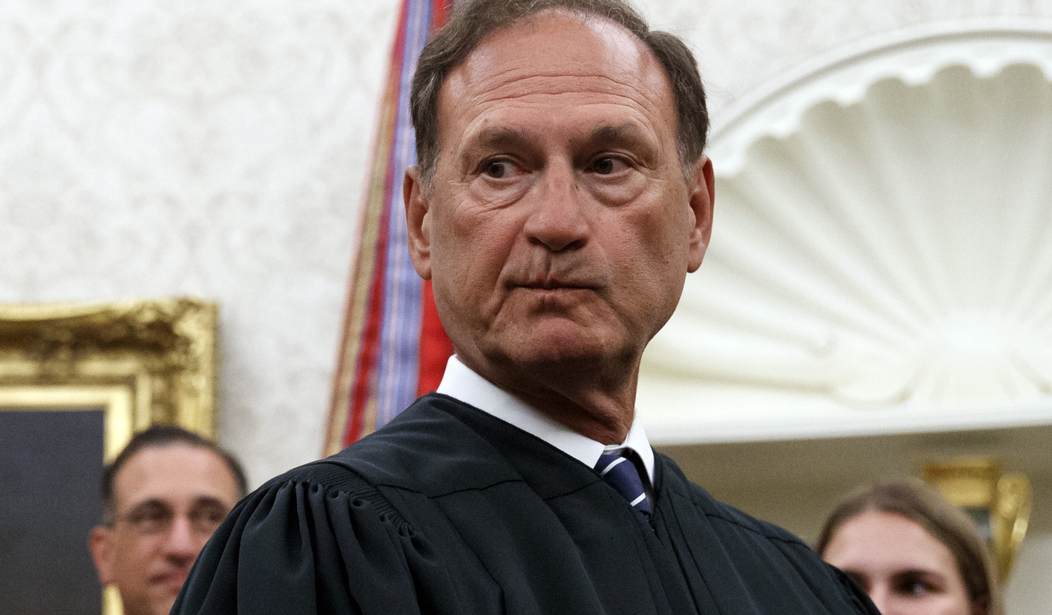
Two other justices would have approved the rules in the moment. Samuel Alito and Clarence Thomas published a dissent objecting to both the standing of the plaintiffs and their legal arguments:
To begin, the District Court issued a nationwide injunction based on claims asserted by several plaintiff organizations that likely lack standing. These organizations first claim a direct organizational injury because the rule supposedly thwarts their ability to educate members about voting. Yet this theory of injury is based on “‘a setback to the organization’s abstract social interests’” and an effort to “spend its way into standing simply by expending money to gather information and advocate against the defendant’s action[s].” FDA v. Alliance for Hippocratic Medicine, 602 U. S. 367, 394 (2024). The organizations also assert associational standing based on injuries to unnamed members who never filed declarations themselves. Such cryptic filings cannot be used to show standing. We have “required plaintiff-organizations to make specific allegations establishing that at least one identified member had suffered or would suffer harm” and to additionally meet the “requirement of naming the affected members.” Summers v. Earth Island Institute, 555 U. S. 488, 498–499 (2009).
As for the plaintiff States, their claims are unlikely to succeed. They claim the rule violates the Elections Clause. U. S. Const., Art. I, §4, cl. 1. This claim, however, collapses into an inquiry about whether the Postal Service has statutory authority to promulgate the rule. Even assuming the rule here is a regulation of elections, Congress may create such rules under the Elections Clause. And, by statute, it may authorize the Postal Service to issue such rules. Because litigants cannot convert claims that a federal entity has “acted in excess of [its] statutory authority” into constitutional claims, see Dalton v. Specter, 511 U. S. 462, 472– 474 (1994), the crux of the dispute is whether the Postal Service has statutory authority to issue the rule.
The two argue that even Kavanaugh's concern over the APA is misplaced, as Congress exempted the USPS from its requirements:
To assert a claim that an agency exceeded its statutory authority, the challenger needs a cause of action, which is typically provided by the Administrative Procedure Act. 5 U. S. C. §§702, 704. However, Congress broadly exempted “the exercise of the powers of the Postal Service” from review under the APA. 39 U. S. C. §410(a); see also Mittleman v. Postal Regulatory Comm’n, 757 F. 3d 300, 305 (CADC 2014). It also channeled many claims against the Postal Service to initial review before the Postal Regulatory Commission followed by review in the United States Court of Appeals for the District of Columbia. See 39 U. S. C. §§3662–3663. These provisions tightly constrain APA review of Postal Service actions.
Unsurprisingly, the statutory claim here is not subject to APA review. It is a challenge to the scope of the Postal Service’s general rulemaking authority and therefore exempt from the APA. §410(a).*
The dissent then gets into the technicalities of the ultra vires claim that would be required absent an APA violation, and deconstructs it in detail. Alito and Thomas then attack the timing of the action as dictated by the plaintiffs rather than the Trump administration and the USPS:
Second, the plaintiff States and the courts bear a substantial share of the blame for the rule’s timing. In April, the plaintiff States sued to challenge the President’s internal directive to subordinates mandating a rulemaking. For months, this litigation cast a cloud over the Government’s ability to issue a final rule. The District Court entered several injunctions months later prohibiting the Government from undertaking that rulemaking. Not only was the Government subject to months of premature litigation and a series of injunctions that this Court later determined were likely issued without jurisdiction, the Government had to wait nearly another full month for this Court to issue its decision so holding. Indeed, this Court spent from late July to the end of August drafting nearly 40 pages of opinions, including two dissents, despite the Government’s public notice that it would not publish a final rule while subject to the injunctions, see 91 Fed. Reg. 44880, and its representation that it had a strong interest in issuing its rule in early- to mid-August to allow time to implement it. The plaintiff States cannot claim the timing of the rule tilts the equities in their favor when they, and courts hearing their claims, are responsible for so much of the delay.
The rest of the court offered no further explanation for the order except to claim that the Trump administration would be unlikely to succeed on the merits against the lower-court injunction. That, however, does not address the merits of the case as laid out by Alito and Thomas, and as hinted by Kavanaugh. The chances for winning these reforms as a USPS regulatory action remain alive, and now the courts have time to hear those arguments with plenty of time before the 2028 cycle. If Congress can't or won't pass the SAVE America Act, there is still an opportunity to tighten up the controls on mail-in balloting before the next presidential election. Unfortunately, that's as good as we can get – for now.
Editor’s Note: Republicans are fighting for election integrity by requiring proper identification to vote. It's common sense, yet Democrats are spreading lies about the impact of such a measure.
Help us continue to call out these lies by joining HotAir VIP and using promo code FIGHT to receive 60% off your membership.








Join the conversation as a VIP Member