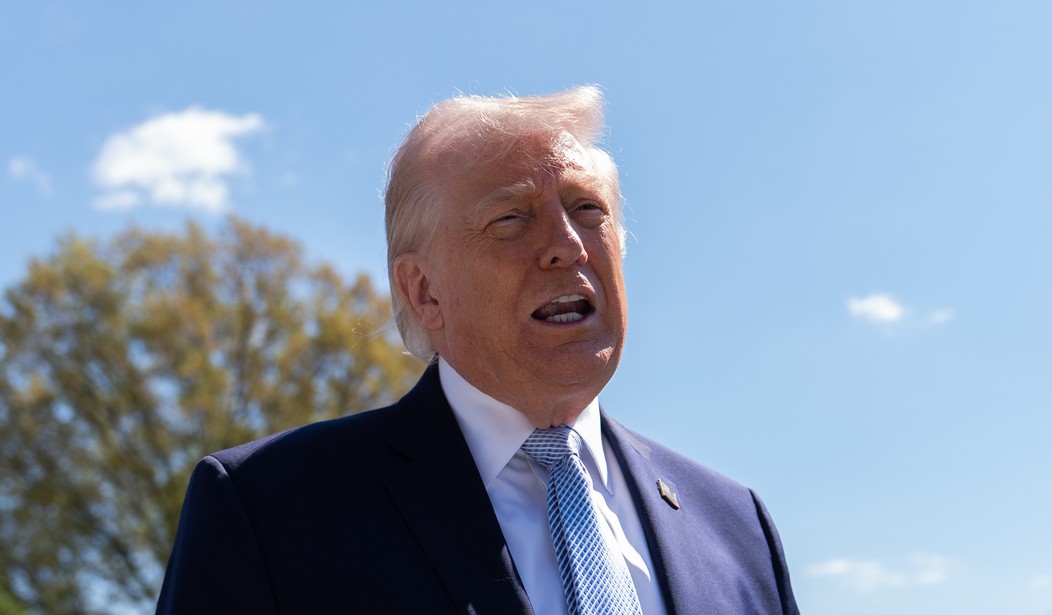
Did Iran just capitulate? According to Donald Trump, the IRGC has caved on the American demand to surrender its highly enriched uranium (HEU) as part of a peace deal to end the war.
There has been no corroboration yet from the regime, and it's not clear from these remarks who in the regime may have made this commitment. Trump made the claim a short while ago when briefing reporters on a wide range of issues:
WATCH 🔴
— Open Source Intel (@Osint613) April 16, 2026
President Trump: Iran has agreed to no nuclear weapons and will hand over the “nuclear dust.”
“Very important is that Iran does not have a nuclear weapon and they’ve agreed to that! Iran’s agreed to that and they’ve agreed to it very powerfully.”
“They’ve agreed to… pic.twitter.com/i9P9JuKvlj
“They’ve agreed to give us back the nuclear dust that’s way underground because of the attack we made with the B-2 bombers.”
If true, and Iran follows through, then Trump just ended the gravest threat to global security in six weeks of war and a week of blockade. It's the if that looms large.
It has always been clear that Trump had no intention of walking away from the conflict without the uranium; it was the only way he could be assured of getting credit for an unalloyed victory in the war, and ending the nuclear threat was always the main objective. Trump had assumed that Iran would have dropped their ambitions for nuclear weapons after Operation Midnight Hammer in June 2025, but the Iranians began attempting to revive it almost immediately afterward. The massacre of civilians in January 2026 forced Trump to escalate, but the nuclear threat was always the priority.
If Iran really has agreed to surrender its nuclear material, that would explain why Israel has agreed to a ceasedfire in Lebanon, too. They want to annihilate Hezbollah, and the IDF has taken them a long way down that road over the last few weeks. The nuclear threat is Israel's highest priority too, however, for obvious reasons. If Trump and the US has ended that threat, the Israelis can afford to take a break from their Hezbollah war to help Trump secure the agreement and get the HEU out of Iran.
However, this still leaves some open questions, and the largest of these is who in Iran agreed to surrender the "nuclear dust." One imagines that Masoud Pezeshkian would love to trade it for an end to the blockade, but unless things have changed drastically in Tehran, Pezeshkian doesn't have the juice to deliver. Perhaps IRGC chief Ahmad Vahidi has changed his mind on the wisdom of pursuing nuclear weapons as Iran's entire infrastructure collapses around him, but that's one hell of a climbdown.
It's not as though Iran has a lot of options, though. With oil exports blockaded, they have less than two weeks of storage capacity at best before they have to start capping wells. Once capped, it becomes very expensive to get oil wells back into operation, and there's a legit risk that they may never produce again. The blockade is a checkmate move by the US, if a slow-rolling checkmate move. And Iran knows it.
So far, there's not much reporting on this supposed agreement, but Trump seems upbeat about the next round of meetings in Islamabad this weekend. He told reporters that he might show up himself if it comes down to a real agreement to end the war:
“If the deal is signed in Islamabad, I might go. The field marshall has been great. The prime minister has been really great in Pakistan. So I might go. They want me to go,” he told reporters outside the White House on Thursday. Moments earlier Trump said that the US might hold discussions with Iran this weekend and that “we are very close to making a deal.”
There is another scenario here that bears a brief mention, too. Trump might be deking the IRGC to start more infighting between hardliners and pragmatists within the IRGC regime. Claiming that negotiators have agreed to give away the HEU to end the war might prompt the radicals to seize more power, which in turn could create a coup-countercoup cycle that would end up decimating top leadership while convincing the rank and file to desert for their own survival.
Is that likely? Naaah. Trump would love a clean deal that gets the HEU out and forces the Iranians to start discussing terror and missile limitations with their GCC neighbors. But it's still possible.
Meanwhile, the White House has apparently briefed reporters on the terms of the Lebanon-Israel ceasefire, and ... it doesn't look good for Hezbollah or Iran:
Israel and Lebanon will implement a cessation of hostilities beginning at 5 p.m. Thursday for an initial period of 10 days.
The initial period might be extended by mutual agreement if the negotiations progress and as Lebanon effectively demonstrates its ability to assert its sovereignty.
Israel preserves its right to take all necessary measures in self-defense, at any time, against planned, imminent, or ongoing attacks--a right it will retain even during the cease-fire. Besides this, it won't carry out any offensive military operations against Lebanese targets.
With the start of the cease-fire, Lebanon will take meaningful steps to prevent Hezbollah and all other rogue, non-state armed groups in Lebanon from carrying out any attacks, operations, or hostile activities against Israeli targets.
All parties recognize Lebanon's security forces as having exclusive responsibility for Lebanon's sovereignty and national defense; no other country or group has claim to be the guarantor of Lebanon's sovereignty.
Hezbollah is continuing to fire at Israel, although the ceasefire doesn't technically begin until 5 ET, so it's not yet a violation. They may want to disrupt the process and force Iran to fight again, but under these terms, Israel can keep targeting Hezbollah in response without violating the agreement. Stay tuned, but we may actually see an end to the wars that Iran has been provoking for 47 years.
Update: The Washington Post correctly points out that this is yuuuge, if true:
President Donald Trump said Thursday that Iran has agreed to hand over “nuclear dust” that was buried by last year’s U.S. airstrikes on key Iranian nuclear facilities, a claim that, if accurate, would be a significant step in U.S. efforts to reduce Tehran’s ability to produce a nuclear weapon. ...
Officials who have negotiated with Iran over its nuclear program in the past have long been skeptical about the possibility of eliminating the nuclear threat by force, saying that a diplomatic path is far likelier to succeed. The military plans for a raid on the “nuclear dust” would require the airlift of hundreds or thousands of U.S. troops deep into Iran for a weeks-long recovery mission, potentially while under fire.
An Iranian agreement to give up the uranium would ease or eliminate the pressure to mount such an operation.
Again, "if true" is a big qualifier. So far the Iranians have not disputed it. Stay tuned.
Editor's Note: For decades, former presidents have been all talk and no action. Now, Donald Trump is eliminating the threat from Iran once and for all.
Help us report the truth about the Trump administration’s decisive actions to keep Americans safe and bring peace to the world. Join HotAir VIP and use promo code FIGHT to get 60% off your VIP membership.







Join the conversation as a VIP Member