







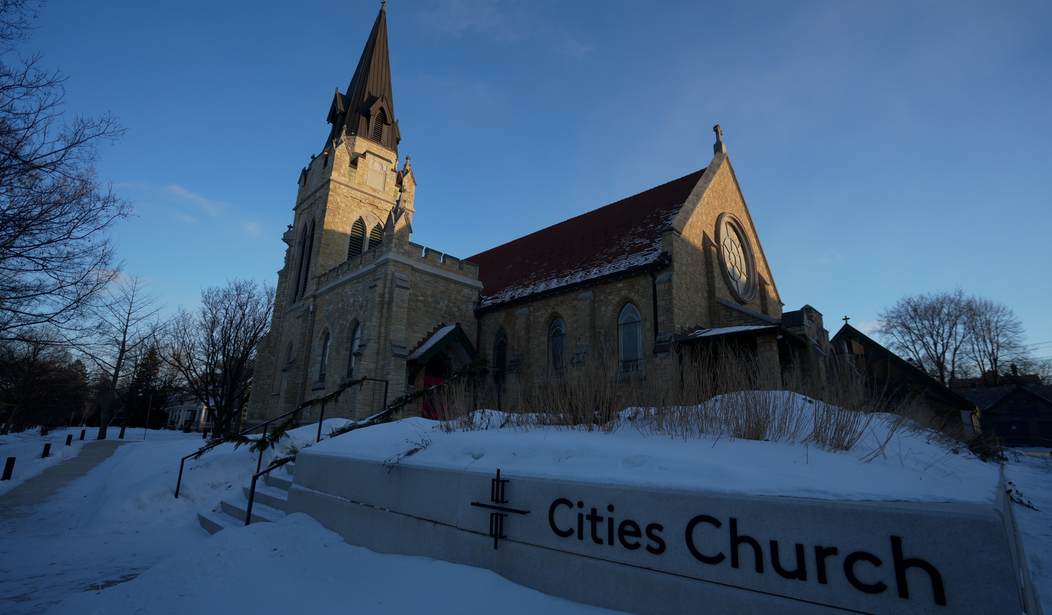

Remember when Don Lemon and a mob of leftist agitators stormed a church service in Minnesota? They blocked parents from accessing their children, obstructed entryways and exits, and harassed innocent congregants—all while chanting against ICE. It was a blatant violation of the First Amendment right to worship in peace.
Minnesota House Republicans responded last week with a straightforward fix: House File 4095, a simple provision elevating intentional disruption of a religious service (when accompanied by another crime) from a mere misdemeanor to a gross misdemeanor. The bill targets exactly the kind of conduct seen in that incident, creating a specific offense for entering a place of worship with intent to interfere with religious exercise.
Democrats, however, refused to engage on the merits. Instead, they launched into rants about unrelated grievances, from federal immigration enforcement to past mass shootings. Their performance wasn't just off-topic—it violated the committee's own rules requiring comments to be germane to the bill at hand. And it appeared to be a coordinated strategy, with the chair enabling the deflection.
One Democrat justified opposition by claiming the bill focused too narrowly on protecting worship while ignoring broader "federal occupation" issues in Minnesota. Another admitted struggling with the idea of leaving people "alone when it's time to worship" only for them to "turn a blind eye" afterward—implying that churchgoers have a moral duty to engage in left-wing protests against ICE, and that failing to do so somehow justifies mob invasions. The disdain was unmistakable: because these congregants didn't prioritize the Democratic immigration agenda outside of services, they don't deserve protection inside them.
When challenged on the bill's narrow, one-page scope—which requires both intent to interfere with First Amendment rights and commission of a crime—Democrats pivoted again. They invoked the tragic 2025 mass shooting at Annunciation Catholic Church in Minneapolis, where two children were killed and dozens injured during mass. "What about the Annunciation families?" they demanded, shaming Republicans for supposedly ignoring them.
This rhetorical sleight-of-hand is one of the left's most exploitative tactics: change the subject to emotion, claim moral superiority, and dodge substantive debate. Here's why it falls flat.
Everyone remembers the immediate aftermath of the Annunciation horror. Within hours—before some parents even knew their children's fates—Democrats, including Minneapolis Mayor Jacob Frey and Governor Tim Walz, rushed to politicize the deaths, pushing gun control and organizing for political gain. Grieving families, vulnerable and seeking purpose amid unimaginable loss, were co-opted into that narrative.
Yet when it comes to actual policy, House Democrats have repeatedly undermined those same families. They voted against school safety funding that would have directly benefited Annunciation and other non-public schools. They advanced their own safety bill that explicitly excluded such institutions. They opposed opting Minnesota into a federal program that could have brought millions to schools, with the Walz administration openly citing benefits to non-public schools like Annunciation as a reason for rejection. In short: parade the families for optics, then exclude them from help.
Republicans, by contrast, have advanced measures that would actually support these schools and families. The attempt to shame them rings hollow when the voting record shows who is truly working to protect vulnerable communities.
This isn't principled disagreement. It's spite: "We're not voting for your bill because you didn't vote for ours"—even when "ours" address completely different issues. It's cynicism, appropriating real grief as a political weapon while blocking solutions and excusing lawlessness against churches.
The days of such emotionally manipulative tactics working are over. Voters now have direct access to context, video, and records that expose the disconnect between rhetoric and reality. HF 4095 wasn't broad or radical; it was a targeted, common-sense defense of a fundamental freedom. Blocking it to own the other side, or to signal solidarity with church-storming agitators, reveals priorities far removed from protecting Minnesotans in their places of worship.
The pettiness on display this week was instructive. It underscores a deeper problem: when Democrats can't defend their position on the substance, they reach for tragedy, deflection, and moral pretense. It doesn't impress. It disgusts. And it won't cow anyone into ignoring real solutions any longer.