








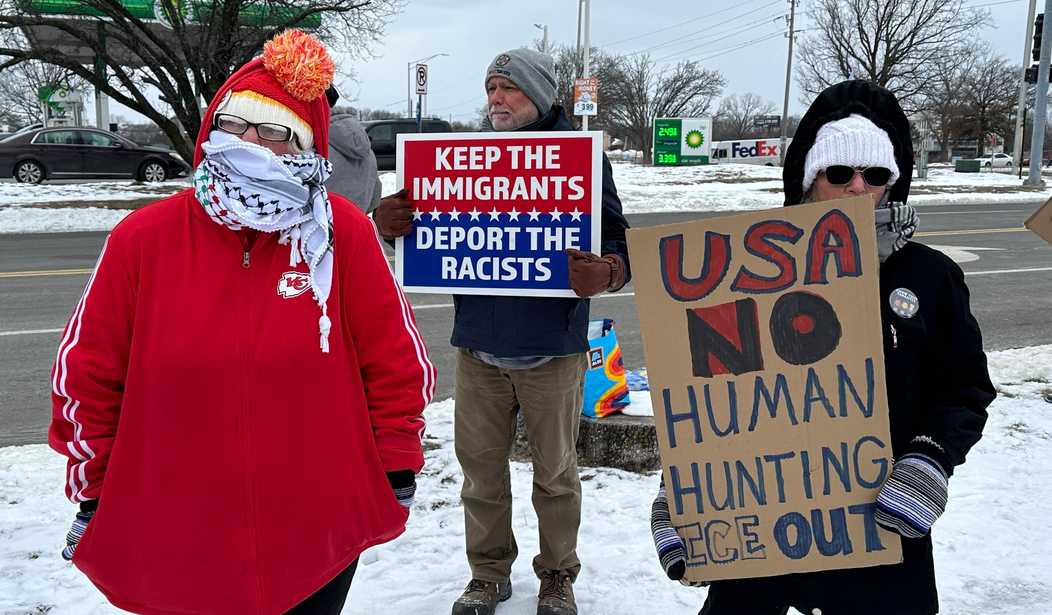

No, people should not be able to show up at your house to protest you—not under any circumstances, not for any reason.
The core question for anyone inclined to do so is simple: Why someone's home? If the goal is genuinely to express an opinion on policy or personalities, to persuade through our democratic process, or to make a statement heard, why not do it online, in front of city hall, at the state Capitol, or virtually anywhere else in public? The only logical answer is that targeting a residence sends a clear subtext: "We know where you live." That message isn't just for the individual—it's directed at their family, neighbors, and everyone connected to them. Its purpose is coercion, not persuasion.
Coercion has no place in American or Minnesotan political life. We engage in persuasive activity here, not intimidation. The mere act of bringing a protest to someone's private home is inherently coercive, especially when linked to demands for specific political outcomes.
This issue prompted me to introduce House File 2809 in the Minnesota House Public Safety Committee. The bill establishes "residential protesting" as a criminal offense, narrowly and constitutionally tailored to prohibit such actions at private dwellings (with exceptions where the residence doubles as a business or public meeting place, like the governor's mansion). It does not ban petitioning the government or expressing grievances—people can still protest at public venues, offices, or online. It simply draws a line at homes, grounded in long-standing time, place, and manner restrictions on speech.
The U.S. Supreme Court has affirmed this approach. In *Frisby v. Schultz* (1988), the Court upheld a ban on focused picketing at residences, recognizing the home's unique status in our constitutional tradition as a place of tranquility, privacy, and respite.
The committee hearing on HF 2809 proved one of the session's rare moments of genuine, good-faith bipartisan discussion. Both Republicans and Democrats engaged thoughtfully, highlighting a key philosophical divide in how conservatives and progressives often view protest.
I emphasized the home as a sanctuary: where we retreat for rest, raise children, care for loved ones, and find peace. It's where the heart is, and what we do in public life is ultimately to protect what's safe there. Yet recent years have seen a troubling rise in coercive agitators targeting private residences—not to persuade, but to intimidate. Examples include mobs outside Mayor Jacob Frey's home in Minneapolis, threats against a police officer and his journalist wife (including burning effigies and vowing to burn the city down), and public threats of disturbance at my own residence in late 2024. These aren't discourse; they're personal intimidation.
Opponents, including some Democrats, raised valid concerns about the bill's language being too broad—potentially affecting innocent activities like a single-person sign in one's own yard along a busy road, or community vigils and marches passing through residential areas. They pointed to existing statutes on targeted residential picketing (under Minnesota's harassment law, §609.748), which define it as repeated marching, standing, or patrolling directed at a specific residence in ways that adversely affect safety, security, or privacy, or block access.
I acknowledged these points and expressed openness to amendments. The bill's intent is to prohibit coercive, disruptive, antagonistic activity at homes—not protected expression on one's own property or incidental passage. There's no "victim" to complain about someone protesting on their own land, and existing laws already prohibit blocking streets or sidewalks without permits. The real issue isn't a total gap in the law—it's inconsistent enforcement and interpretation, where authorities hesitate to act against disruptive conduct when cloaked in political speech, fearing First Amendment challenges.
We discussed hypotheticals: serving legal process (lawful, not protest), welfare checks (legitimate), or uninvited groups scaring children (unacceptable, as in a recent incident where my own child was left terrified and armed himself). The discussion circled back to conduct over labels: Protest inherently involves expressing distaste or antagonism toward a target. Bringing that to a home crosses into intimidation.
Democrats suggested strengthening the existing targeted residential picketing statute instead of a new crime, noting its focus on actions "directed solely at" a residence. I agreed that's intriguing and worth exploring—perhaps via a delete-everything amendment to HF 2809 that refines intent along those lines.
The current targeted residential picketing law is weak; it requires an initial incident and grievance before escalation becomes criminal. Strengthening it to provide clearer boundaries and better enforcement would align with the bill's goal: ensuring we all enjoy peace in our homes, free from coercive political tactics.
We should not tolerate the "we know where you live" message as legitimate activism. Homes are off-limits for protest. Persuasion belongs in the public square—not on doorsteps.