
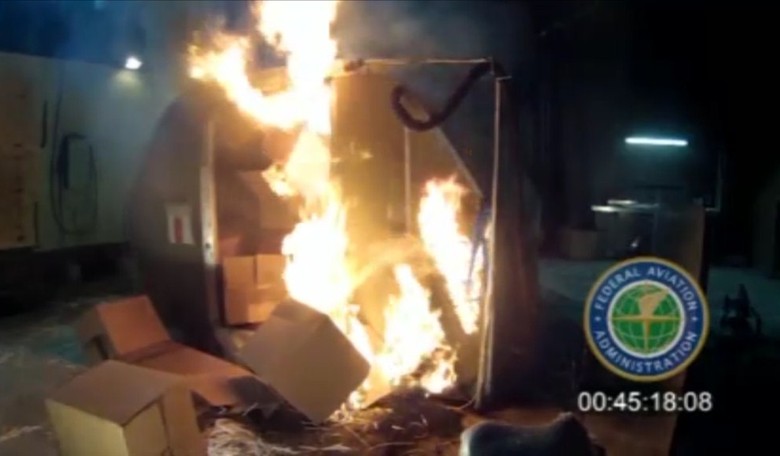
It's been a bit since I had a chance to do one of these. There were a couple of interesting stories (we could also call them cautionary tales) about one of my favorite subjects - lithium-ion batteries and the fires that happen when something goes amiss with their internal workings. So I figured I'd hit them all.
Gov. Mikie Sherrill sent the state's request to President Trump yesterday for a major federal disaster declaration for three of the shore's counties, for damages incurred after the late September nor'easter that blew through.
Gov. Mikie Sherrill has requested a federal major disaster declaration for Monmouth, Atlantic and Cape May counties following a severe nor'easter that struck New Jersey in September.
Sherrill sent a letter to President Donald Trump on Monday seeking federal assistance to help the three counties recover from storm damage.
According to the governor's office, FEMA validated preliminary damages totaling nearly $27 million across the three counties: $13.8 million in Cape May County, $8.5 million in Monmouth County and $4.7 million in Atlantic County.
All three counties exceeded FEMA's per capita damage indicators, ranging from nearly three times the threshold in Monmouth County to 30 times in Cape May County.
For one thing, it seems fire departments along the New Jersey shore were having themselves a time for weeks after the storm.
What fire companies in those counties were running into was very reminiscent of South Florida's recent experience with hurricane flooding and garaged EVs - they don't mix.
But where most people seem to have learned that lesson and are making sure those vehicles are out of the garage and harm's way should water intrusion be a possibility, they're not taking into account other modes of transportation they have (especially in beach communities) that also run on those volatile components.
Golf carts do not mix well with water, either, as one family tragically found out.
This is so sad. I'm sure the golf cart looked fine. But it burned multiple homes and killed their poor dog.
Did you see a lithium battery in a flood-damaged golf cart exploded Thursday morning in West Wildwood, setting off a fire that burned homes on Maple Avenue!? And these Dem NJ politicians want to force these battery operated cars on us everywhere still Officials say the cart had been exposed to saltwater in last week’s nor’easter. The homeowners weren’t there. Their dog died in the fire. Fire crews say this is one of about a dozen battery fires since the flooding, and they’re warning people not to use or charge golf carts, e-bikes, scooters, or other devices that got wet https://t.co/vm1YmqfjuL
— Wake Up NJ 🇺🇸 New Jersey (@wakeupnj) October 4, 2026
...Officials say the cart had been exposed to saltwater in last week’s nor’easter. The homeowners weren’t there. Their dog died in the fire. Fire crews say this is one of about a dozen battery fires since the flooding, and they’re warning people not to use or charge golf carts, e-bikes, scooters, or other devices that got wet
Don't charge anything that 'got wet.' The local fire departments are calling those items 'ticking time bombs.'
The very same warnings are out all over California right now, especially in the hard-hit coastal areas. Again, thanks to the prevalence of EVs there.
Damage from a week’s worth of high surf and El Niño-related storms brought many warnings from officials. Beaches were closed. Homes were evacuated and red-tagged.
But one alert was targeted to a specific audience: owners of electric vehicles that were submerged by the flooding.
“If you notice smoke, hissing, popping or unusual heat, move away immediately and call 911,” the Laguna Beach Fire Department said. “Do not attempt to move the vehicle or extinguish the fire yourself.” It also warned that if the car had been partially submerged it shouldn’t be driven or charged, even if it appears to operate normally.
California is the epicenter of America’s EV market, representing about 19% of all new car sales, according to a UC Davis study. Now, California faces an exceptionally wet El Niño winter. Most forecasts say it could be the biggest on record, bringing rain and the potential for more flooding.
Experts say electric vehicles are susceptible to starting a fire when their batteries are inundated with salt water. During the weekend storms brought by Tropical Storm Rachel, floodwaters swept into Newport Beach’s Balboa Peninsula and exposed cars parked and driving through the area to standing water, which may have corroded batteries and created hidden hazards. Experts expect more coastal flooding as El Niño peaks in California this winter.
It’s not that EVs are inherently dangerous. But water affects them differently from cars with internal combustion engines. Gas-powered cars have their own problems from flooding, such as electrical system malfunctions, rust and mold.
Don't let the Pacific soak your lithium-powered transportation, and if it does, just because it looks fine, don't trust it.
Also, do not take your vehicle through an area that's flooded. A stretch of I-40 was shut down in New Mexico by flooding this weekend, and there are always people who are going to try it, come hell or...well...the high water that's already there.
And don't believe the crap some people are saying that it's only 'saltwater' that's the problem for EVs.
It's just varying degrees of bad, and you can't take chances with any of them. Or shouldn't.
...If the flooding was just a few inches and just brushed the underside of the car, it’s probably okay, said Patrick Durham, a volunteer fire captain in Michigan with a mechanical engineering and electric vehicle development background who now works as a consultant to various fire departments.
But if water breached the “rocker panel,” which in modern electric and hybrid vehicles serves as a structural shield protecting floor-mounted battery packs, that’s a clear red flag, he said.
In other words: “If your floor boards are wet, then you likely have a problem,” Durham said.
Any brand of electric or hybrid vehicle is susceptible, Durham said. Risk of damage depends mainly on how high the battery is located. But because lithium batteries are so volatile when damaged, he said the vehicle should be treated as a hazard if there’s even a question of water exposure and a professional inspection should be a priority.
“If it’s been submerged in water it’s bad. If it’s been submerged in salt water, it’s really bad,” Durham said.
A quick recap on 'why they're such a pain if they light off.'
🔋🔥 ¿Por qué es tan difícil extinguir un incendio en una batería de litio? El CO₂, el polvo ABC, el agua o las mantas ignifugas pueden apagar las llamas por momentos, pero no detener la reacción térmica que se produce en el interior de la batería, provocando nuevas reigniciones https://t.co/1KZqsgeocl
— Bomberos Madrid (@BomberosMad) October 27, 2026
Especially if they happen to be cheap Chinese Li-ions that like to go boom on their own.
EV scooter battery at fire, again. But in China. https://t.co/nrWeFsFaTV
— Shubham Mishra (@ildivino_42) October 25, 2026
The National Park System (NPS) has noticed an uptick in Li-ion battery fires, with e-scooters and bikes catching fire in the back of trucks as they're brought into parks or while charging. It's gotten so concerning that the Park Service issued a formal warning a couple of days ago, in hopes that visitors would be extra cautious when utilizing these really nifty tools for getting around.
The newest fire hazard in national parks does not come from lightning or campfires. It comes from the battery pack strapped to the e-bike in your truck bed, and the National Park Service has seen enough incidents to issue a formal warning.
The agency’s lithium-ion battery advisory, released as part of Fire Prevention Week, after a string of close calls on park property. In June 2025, an electric unicycle exploded and caught fire at a vacation rental cabin in Wawona inside Yosemite, damaging a fence and part of a roof. This past July, firefighters at Grand Canyon responded to an e-bike burning inside an apartment. In September, batteries aboard a boat at Wahweap Marina in Glen Canyon National Recreation Area went into thermal runaway and started smoking.
Lithium-ion batteries pack enormous energy into a small space, which is what makes them useful and also what makes them dangerous when they are damaged, overheated or charged with the wrong equipment. Failures escalate in seconds and are notoriously hard to put out, a problem that grows when the nearest fire crew is an hour down a canyon road.
The Park Service is not telling anyone to leave their e-bikes or devices at home. The guidance is to charge outdoors or away from exits when possible, never charge overnight or unattended, use only the charger made for the battery, and stop using any battery that gets unusually hot, swells, leaks, smokes, smells odd or starts hissing or popping.
The other ominous use for e-bikes?
Trust the 'youths' in the French riots to exploit all that explosive thermal energy for malevolent purpose.
It seems the rampaging mob has been running dumpsters up against apartment buildings and businesses, and lighting them on fire. Then taking stolen e-bikes and flinging them into the dumpster, counting on the fire to send those Li-ion batteries into thermal runaway, and subsequent explosion.
It's a miracle someone hasn't been killed yet.
This video is taken from a fourth-floor apartment in the aftermath of one such attack in Marseilles (not Paris), where the residents thought they were safe from the mob on the street below.
Until the flaming dumpster and the e-bike fuel arrived.
@TheLastRefuge2 Tell me that tactic wasn't workshopped at a planning session.
— mafia state princess (@NobodyNobdySent) October 25, 2026
The color revolutionaries want you burned out of your home and horribly maimed at the very least.
In their eyes, dead would be even better.
Need another reason to vote?
There it is.
And there's your science briefing for today.