
The Iranian regime's access to the Strait of Hormuz has been cut off but the regime is still able to sell some oil and other products over land routes. Because of U.S. sanctions, it has been difficult for the regime to do any trade in dollars, so it has set up a shadow banking network. The Trump administration has been cracking down on those all year, including back in July.
The United States is taking decisive action to cut off the financial lifelines sustaining Iran’s ruling elite. Today’s action targets Ali Ansari, a Dubai-based Iranian national who has built a sprawling global network of real estate and commercial holdings — spanning Germany, the United Kingdom, Spain, Cyprus, the UAE, and beyond — on behalf of Iranian Supreme Leader Mojtaba Khamenei and other regime insiders.
The United States also sanctioned three Iran-based currency exchange houses — Mohammad Darbani and Partners, Lavasani and Partners, and Mohsen Khandan and Partners — along with their managing partners and associated front companies. By targeting these networks, the United States is directly disrupting the regime’s ability to access foreign currency and conduct international financial activity.
We made another effort at this in August, this was called Operation Economic Outcast and was initially aimed at a bank in the UAE:
Treasury Secretary Scott Bessent on Friday threatened to cut off $1.8 billion in Iranian shadow banking being processed through the United Arab Emirates as part of Operation Economic Outcast.
The Treasury is targeting Banque Misr UAE, which it estimates processed about $1.8 billion between January 2024 and June 2026 for 103 companies that are potentially part of Iranian shadow banking networks.
Unfortunately, there are a large number of unscrupulous currency exchanges which are happy to take Iran's money. Today, the U.S. announced another round of sanctions aimed at dozens of them.
The Treasury Department on Monday imposed sweeping new sanctions against more than two dozen Iranian exchange houses, overseas front companies and financial operatives accused of moving billions of dollars through a global "shadow banking" network to keep Iran connected to international trade.
The action, carried out by the Treasury’s Office of Foreign Assets Control (OFAC), targeted "financial plumbing" spanning Iran, Dubai, Hong Kong and Turkey that officials say enables Tehran to bypass U. S. restrictions, sell oil and petrochemicals, and settle transactions in Russian rubles and Chinese yuan.
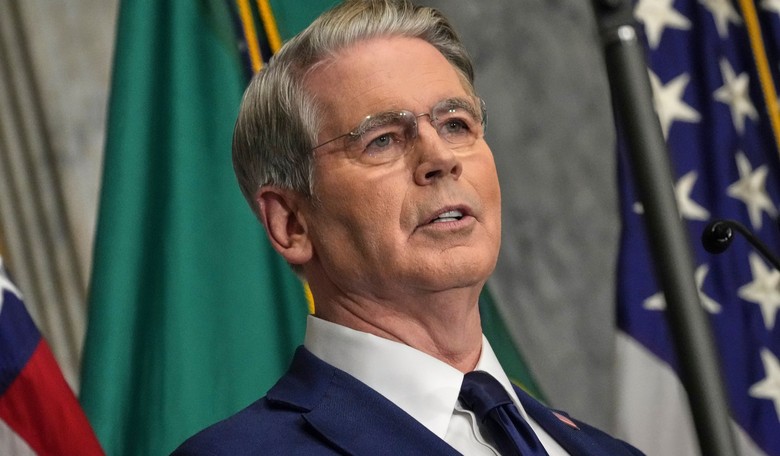
"Iran’s economy is underwater, and its leaders are panicking," Treasury Secretary Scott Bessent wrote in a statement Monday before the news release. "Iran’s shadow banking system is the last financial lifeline of a bankrupt regime. Treasury will continue dismantling these illicit networks until we have buried the head of the snake."
Treasury also announced today that it had identified nearly $15 billion in shadow banking taking place since January 2025:
According to the Treasury Department, Iran's "shadow banking" apparatus is overseen by the Central Bank of Iran and relies on domestic currency exchange houses paired with bank-affiliated "rahbar companies" that manage sanctions-evasion networks through thousands of foreign shell firms. As declining oil revenues and existing sanctions squeeze the Iranian economy, Treasury said shadow banking facilitators have increasingly failed to repatriate export earnings while enriching themselves with state funds.
The Treasury also revealed Monday that its Financial Crimes Enforcement Network (FinCEN) "identified approximately $14.7 billion of financial activity from January 2025 to August 2026 potentially linked to Iranian shadow banking."
Over the weekend, Iran's President said the country was involved in a "silent" economic war which was harder to deal with than falling bombs.
Iranian President Masoud Pezeshkian describes the economic pressure facing Iran as a “silent war,” saying it is harder to endure than a conventional war involving missiles and destruction. https://t.co/vnAc8MKxMG
— Al Arabiya English (@AlArabiya_Eng) November 23, 2026
I've mentioned this several times but inflation in Iran is running in triple digits.
#IranWatch🇮🇷: Today, I measure Iran’s inflation at a CRUSHING 148%/yr. That's the WORLD'S 3RD HIGHEST rate of inflation, behind Venezuela and Sudan. I REMAIN THE ONLY ACCURATE SOURCE FOR INFLATION MEASUREMENTS IN IRAN. https://t.co/L09F90daP3
— Steve Hanke (@steve_hanke) November 23, 2026
And there are other signs Iran's economy is starting to crack:
Truck drivers in several Iranian cities have gone on strike over rising operating costs, stagnant freight rates and worsening economic conditions, with reports of work stoppages emerging on Sunday.
A video sent to Iran International showed a group of truck drivers stopping work in Shiraz, southern Iran, on Sunday.
The Telegram channel of the Union of Truck Drivers and Trucking Associations Across Iran also reported strikes in several cities, including Chabahar in southeastern Iran’s Sistan and Baluchestan Province and Dezful in southwestern Khuzestan Province, citing messages from its members.
“We went on strike because of these incompetent officials who do not care about the country or its people. We cannot go on like this anymore,” one driver wrote in a message to the union.
Iran's willingness to murder protesters in the streets is probably why we're not seeing many protests yet. But eventually, even the goon squad shooting people are going to be out of money and looking for change. How much longer will it be before they turn the guns on the regime itself? The regime's leaders are still hoping Democrats can rescue them before it gets to that point. We'll have to wait and see if that happens.