
I don't take it lightly when anyone loses a job. No matter who that person is it's a serious setback and doesn't feel good. But I think the Washington Post's decision to focus on Dia Harris, a former government equity officer, seems a bit odd.
Since President Donald Trump returned to office, nearly 426,000 of the nation’s 2.2 million civilian federal employees have left the government...
Thirty-two thousand full-time workers were fired. Harris was one of them.
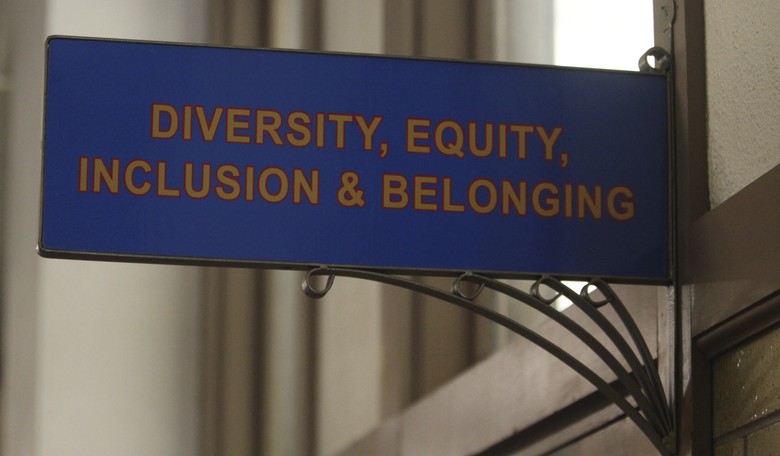
Harris was the first chief equity officer for the Administration for Children and Families, or ACF, a large agency in the Department of Health and Human Services that helps vulnerable Americans with foster care, home energy needs and early education. He was among more than 200 employees targeted for dismissal by DOGE after Trump issued an order to rid the government of diversity, equity and inclusion initiatives, which he declared were divisive and destructive and “would have ruined our country.”
Thirty-two thousand workers fired but this is the one the Post focused on. Surely there are lots of people who lost government jobs in the last few years who aren't pushing "anti-racism" for a living. Maybe so, but we're in for a long slog through weepy paragraphs like these:
Now, his $16-an-hour paycheck was barely enough to cover utilities. It was supplemented by a second part-time job and help from his 71-year-old mother, who’d recently picked up extra hours at the Hallmark shop where she’d worked for the past two years. But he was also using his 401(k) to pay the mortgage and his credit card bills, and that would be empty by next year.
Pulling into a long, low strip mall, he parked and closed his eyes. He didn’t have to clock in for another 15 minutes. He told himself to forget the Dia Harris who’d earned two degrees; the sought-after HR expert who’d drawn six-figure salaries from Fortune 500 companies; the little boy who grew up in North Philadelphia eating blocks of yellow cheese from the government and who swore he’d never work part-time jobs like his mother.
He thought of his mom, on her aching feet at Hallmark. “If she can do it,” Harris said to himself, “I can do it.” He got out of the car, adjusted his cap and vanished through the sliding glass doors of the supermarket Harris Teeter.
It's hard out there for a DEI expert. Like a lot of proud DEI proponents, Harris tried to save his job by changing his job title.
In the last days of 2024, as his colleagues swapped rumors that the incoming president was going to delete DEI from the government, Harris and his boss came up with a plan to save his job.
As chief equity officer, Harris was tasked with ensuring that the workforce of the ACF resembled the Americans it served. Before Trump’s inauguration, he switched to become a “senior advisor” in the Office of Community Services, which distributes funds, diapers and legal services to the poor. He saw it as more or less the same worthy mission: bringing in good people and helping them help the neediest Americans. Who, he wondered, could find fault with that?
The Post is a bit vague about whether this was a rebranding move or not, i.e. did his actual work really change or was he just going into hiding. The Post suggests his job changed but, to be frank, I don't believe it. We've posted plenty of examples of DEI officers rebranding to the "Office of Belonging" or some similar nonsense. The jobs stayed the same but the names were changed to protect them from cuts. I suspect that's what happened here as well.
Harris actually seems to have had some really good jobs before he became a DEI maven in 2022. He actually took a pay cut to fight "systemic barriers."
As Harris approached 50, it felt like time to give back. He designed a two-story home in a wealthy Maryland suburb and invited his mother to live with him, building her a basement suite. In November 2022, he spotted a job announcement on LinkedIn. The Administration for Children and Families was seeking someone to fill a new position dedicated to “recruiting and sustaining a diverse workforce” so that all employees could better “[contribute] to the mission, vision and strategies of the organization.”
It was one of many jobs created by the Biden administration after the 46th president signed an executive order on his first day in office “advancing equity across the Federal Government.” The order directed every agency to assess whether its policies and programs posed “systemic barriers” to “people of color and other underserved groups.”
After he beat out the other applicants, he called a longtime friend with the good news. The friend, who spoke on the condition of anonymity because she still works for the government, said Harris was elated. “Finally,” she remembered him saying, “I get to make a real difference.”
The Post frames this as a story about Harris growing up poor in Philadelphia but I suspect there's another reason he made this decision in 2022 at the height of the BLM dominance over our culture. But the story is completely stripped of any discussion of his politics or his personal motives beyond he wanted to help. The only time we get into politics is when an anti-DEI website posts a photo of Harris and branding him a DEI die hard.
He clicked on the “dossier” devoted to him. It detailed his employment and education, seemingly pulled from his LinkedIn page, and a photo taken from his social media. It also included a clip from a 2024 “National Call to Action on Equity” webinar, at which Harris had called himself “unapologetically a Black man” and vowed to “embed equity into every aspect of our lives.”
“DEI isn’t just a career for Dia Harris. He sees it as [a] mission outside of work, too,” the site stated — like it was a sin, Harris thought.
It's not a sin, per se, but it is an obnoxious and objectionable view that not everyone in the country shares and even fewer want to pay for. It's also not clear that DEI training, in practice, is legal. Companies are not supposed to discriminate based on race, so efforts to hire only black and brown people are dubious at best. Again, Harris' response was to hide.
Harris pulled out his phone and started deleting: Instagram, then Facebook. He temporarily deactivated his LinkedIn. When people noticed his electronic disappearance, he told them he was “taking a break.”
And he's been taking a break for over a year now. The Post clearly wants us to feel sorry for Harris. To the authors (there are two), DEI is just doing the Lord's work.
A less biased paper might have sent someone who would ask Harris a few tough questions about his job, about his politics, and about DEI itself. Instead it's just another victim narrative for the Post's left-wing readers.
I'll say this about this article. It makes me appreciate the honesty of Nikole Hannah-Jones. She may be a partisan and a bit of a nut on racial issues, but she's at least capable of writing something with more than one side to it.