
The Washington Post has really done everything it can to convince people that Trump's changes to the White House and Washington, D.C. are terrible crimes against architecture.
For instance, the Post spent months covering every detail of the Reflecting Pool story. They seemed elated when an algal bloom turned the water green and published multiple stories about it.
Their culture critic Philip Kennicott wrote a bunch of stories about the ballroom and the East Wing. Some of these were the usual complaints about its size and appearance but in one case in April, Kennicott really outdid himself arguing that building the ballroom was all about Trump making himself into a king.
He has previously been unable to convince the American public that the White House needs an ornate entertainment venue that would dwarf the historic mansion. Now, he seeks to convince them that he can’t be safe without one.
This suggests that he plans to leave behind not just a radically transformed White House complex but a different conception of the presidency. The regal trappings Trump favors in design and architecture will now be mirrored by an essentially regal protocol for seeing the president. If the president can safely mingle with others only within a fortresslike ballroom on the White House grounds, then he will no longer be out among the people, no longer in touch with ordinary life. The presidential bubble will be bulletproof — and bombproof and droneproof — but it will also impede the free flow of information from the grass roots to the executive.
He wrote this just days after the attack on the White House Correspondents' Dinner. At the time, lots of people on the left were claiming that attack was some kind of setup designed to build support for the ballroom. Kennicott didn't go that far. Instead he stuck with the dumb idea that the ballroom would make Trump less approachable. As if the President can usually be seen walking the streets in DC. Here's what I said about it at the time:
Here's a thought which doesn't seem to occur to Kennicott. Presidents have been driving around in armored cars since 1942. Armored cars became standard for every president after the assassination of JFK. Has the armored car impeded the free flow of information from the grass roots to the executive? If so, what is the alternative. Should we ask the president to drive around in a stock Chevy Blazer to restore that information flow?
What about Air Force One? That impulse also goes back to FDR who had a specially built plane called the "Sacred Cow." Should we ask Trump to fly coach to make sure he gets all the needed information from the grass roots?
In any case, the Post is at it again, this time with an article co-written by three authors. The shocking truth revealed in this one is that Trump's planned arch will cast shadows. I kid you not.
The Post built a 3D model of the arch and the land around it and then shows us where the shadows will fall the longest (May 12) for the brief time when the sun is low on the horizon.
6:02 a.m. For nine minutes, it falls on the John F. Kennedy Memorial, briefly covering the eternal flame. It passes over the Military Women’s Memorial for 22.
6:06 a.m. Around the same time, it covers the grave sites of Supreme Court Justices Thurgood Marshall, William H. Rehnquist and Ruth Bader Ginsburg.
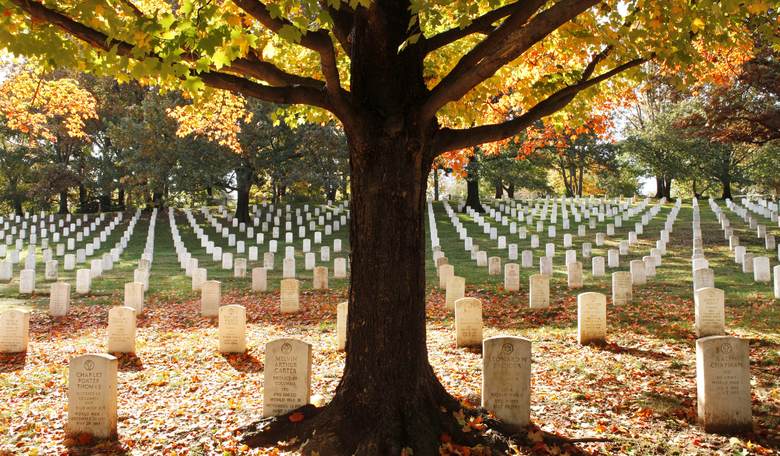
6:12 a.m. For more than 15 minutes, the shadow falls over white marble markers of World War I and II veterans buried in this section.
6:23 a.m. In total, the shadow lingers on the cemetery grounds for more than an hour. It falls on more than 2,000 graves.
If you keep reading, the Post admits that Arlington Cemetery isn't even open to the public until 8 AM At that point, the shadows are long gone.
On most days, by the time the cemetery opens at 8 a.m., the shadow would recede from the grounds. It would linger past that time on 26 days, the model shows.
Nevertheless some people are disturbed by Trump's shadows.
Micki McElya, a history professor at the University of Connecticut, said the symbolism of having Trump’s arch cast shadows on the military cemetery was “undeniable” and uncomfortable, even if the effects were visible only briefly after the cemetery opens.
“It’s not about people in the cemetery seeing shadows so much as it is about the fact of the shadows themselves,” said McElya, whose 2017 book about Arlington National Cemetery was a finalist for the Pulitzer Prize.
It's like the old rhetorical question about a tree falling in a forest. If Trump's arch casts a shadow and no one is there to see it, does it make the world darker?
All of this is coming from a group opposed to the arch.
The idea that the monument would cast a shadow on the resting places of veterans, politicians and other prominent American figures is “a sacrilege,” said Paul Eaton, a retired U.S. Army major general whose parents are buried in the cemetery.
Eaton works with VoteVets, an advocacy organization for military veterans that has opposed Trump’s project. The group raised concerns about the shadow to The Post after it conducted an analysis using artificial intelligence.
My grandfather is buried at Arlington. I don't think he would have cared about this. It's a brief shadow, like the brief shadows cast by trees that are all over the grounds.
Google tells me there are 9,800 trees at Arlington. Many of them cast shadows on graves. In fact, some are planted specifically to do that. So this isn't really about shadows on graves, it's about progressives willing to do and say anything to prevent Trump from leaving a mark on the nation's capital. That's what they really care about. It's the same with the ballroom. Everyone knows a ballroom is long overdue. The problem (for the Post and other progressives) is the person building it.
Final approval for the arch should happen next week and construction will begin almost immediately. So this is really a desperate, last ditch effort to stop that progress.
Meanwhile, over at the White House, the Trump Ballroom is really coming along.
Latest photos of the White House Ballroom construction today (October 27th) We can finally see the progress they’ve been making on top, building the roof. It looks about halfway covered so far. At 20 hours a day and 7 days a week, no doubt the site will be covered before winter https://t.co/J2AdrvEolV
— Syrup🥞🇺🇸 (@Seerupy) October 27, 2026
And progressives just can't get over it.
Trump is heckled for a third time at his speech in Mississippi: "SHOVE THAT BALLROOM UP YOUR FAT ASS!!" https://t.co/cpFe20w6MM
— Headquarters (@HQNewsNow) October 27, 2026