






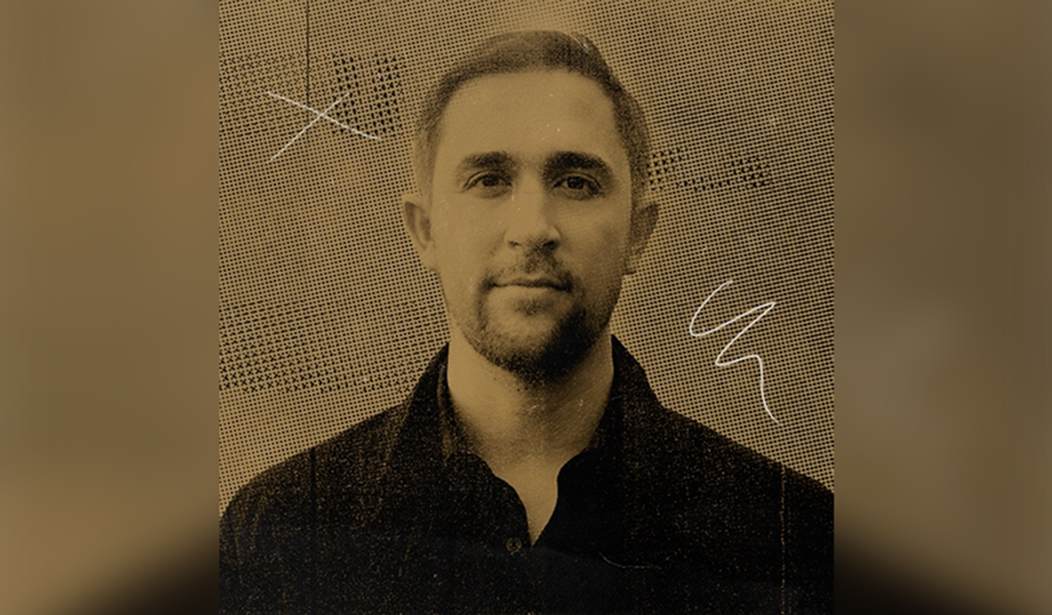
The NY Times just published an interesting podcast discussion between Ezra Klein and Christopher Rufo. It's a good conversations because there's some real back and forth on substantive issues. Because it's a long discussion a lot of territory gets mentioned but I wanted to focus on what seems to be the through-line, which is identity politics.
It starts with a question about whether or not President Trump is succeeding in restoring "virtue" to American life. [Klein's quotes are in bold below.]
Make the case to me that Donald Trump is restoring virtue.
[Laughs.] This is a hard case because what you’re going to say is that Trump does not exhibit Christian virtues in his personal life, right?
I’m not even thinking about his personal life. I’m thinking about his public life...
Sure, I’ll make the case, and I’ll make it through the particular example that I’m most familiar with.
One of my big campaigns the last couple of years was the fight to abolish D.E.I.
Diversity, equity and inclusion was this idea that had been germinating in the 1990s and in the 2000s, but it really exploded into public life with universal adoption by most large institutions after 2020. And it was this idea that’s very simple: that there are oppressor groups and oppressed groups in the United States because of the historical realities of our country, and therefore, to achieve and to move toward equal outcomes, you have to treat individuals unequally according to their group identity.
And the president, on Day 1, issued an executive order that was very much in line with the work that we have been doing — to go and wipe out the D.E.I. bureaucracy throughout the federal government.
In that case, you could argue that the principle of equality and impartiality, as we were discussing earlier, had been restored. Not totally — we still have some problems with the underlying statutory law.
I agree with Rufo on this point. Trump is nobodies idea of a moral paragon, but I think he has made some important changes that are helping pull the country back from an extreme edge.
Eventually they come back to discussing Tucker Carlson and where he seems to be heading now relative to the way he was when he still worked at Fox News.
He talked a bunch about the great replacement theory. This has been exhaustively documented. I mean, there are biographies of the guy. The Times did a bunch of work on this. The bringing in of a macro-narrative that there was a function of what’s called a cabal of elites importing brown voters to replace you — that you are being betrayed by elites representing foreign interests and foreign people to alter the culture of this country to their benefit — was something he hammered all the time...
A relentless focus on crime from immigrants, a relentless focus on George Soros.
To me, I see Tucker now, and I see Tucker then, and I agree, the shackles were off a little bit. But I see him calling the same play. He’s just had to turn up the dial a little bit because he doesn’t have Fox News...
...the narrative that you’re portraying, I don’t think that’s exactly how I would put it, certainly. But the underlying facts are either true or not true, and in this case, mass demographic change has been and is a reality in the United States.
And I think it’s fair to talk about that politically. We’ve been talking about it politically for 10 years. And you could do it in a way that exemplifies bigotry or discrimination, of course, but you can also do it in a way that isn’t an expression of bigotry or discrimination...
So I don’t think that it is right to say that someone who is concerned about rapid and large-scale demographic change is a white nationalist. That seems like a kind of smear ——
Klein eventually agrees that it's possible to care about immigration and not be racist. Rufo tries to make the point that the right's "racialism" is a fringe not accepted by the party while the left's violence and harassment seems to come directly from the institutions.
After 2020, the left maintained a kind of apparatus of social annihilation, and I went through it myself.
I had the A.C.L.U. subpoena me and harass me with a lawfare campaign that cost me a lot of money. I had the S.P.L.C. and then the A.D.L. put me on some sort of hate list that was totally bogus, trying to destroy my reputation. I had threats of violence against me that were very credible at the time. And people trying to go after my family, my kids.
We shouldn’t forget just how awful that period was and how insane that period was. And unfortunately, while I think that many of the institutions on the left have learned after having suffered some consequences for enabling that, the movements that they have sparked are, in fact, alive and well.
I think the difference that maybe you’re not seeing is that the radical nihilistic and violent left-wing movements have the full support of the left’s institutions. And what we’re talking about is: Radical nihilistic movements on the right do not have any institutional support. They’ll bubble up in your Twitter comments. Which, again, I don’t agree with, but is different in kind, and not just in quantity.
Ultimately they get back to identity politics.
There is a racialist right, let’s say. I’ve been writing about this for a number of years.
But I think a lot of it is something of an optical illusion — and you see this on, let’s say, the left, where a small group of people that is very loud online appears to represent a larger share of a political coalition or the general population than it really does.
Look, I don’t want a racialist right. That is a clear position on my part. And to the extent that we have antisemitic conspiracy theories bubbling up from the digital sphere, it’s a problem that we have to deal with — an untruth or a falsehood that should be called out for what it is.
But Rufo blames this shift, among young people, on the left.
These are guys who hit high school during Covid. They transitioned into an almost purely digital life, with all of the various rabbit holes you could get into. They’re entering adulthood during the George Floyd hysteria, where their teachers at school, their media, institutions, the government, everyone was saying: You’re a young white man. You’re the problem. You’re the oppressor. You’re evil. You should be denied opportunities because of your biology, because of your ancestry.
Essentially, they were programmed by the George Floyd hysteria into thinking racially, instead of what I think is the proper and correct response, which is to say: We’ve got to move beyond this. We’re going to fight this racialist thinking on the left, on the right, wherever it comes from.
They essentially psychologically submitted to it, but then reversed the polarity. I don’t think that’s a good way to pursue it. I don’t think, on the philosophical question, it’s right, and I don’t think that from the practical, political conception, that it’s fruitful.
I've been saying for years now that if you tell people their race is a crucial part of their identity, some of them will believe it. So I don't think you can have these left-wing groups constantly embracing a woke (oppressors vs. oppressed) racialist framing of every issue (and getting a ton of positive attention for it) and also be shocked when some people on the right adopt the same lens. Even Klein admits this is a problem.
The more you tell people that their identity is a problem, the more they’re going to begin to defend that identity and feel that identity, and begin to self-define around that identity. So I think all of that happened.
And I think you would also agree, perhaps, that the institutions, the legal system, the prevailing narrative at universities, corporations, etc., was explicitly anti-white for a number of years that for these young people were formative.
It’s sometimes moved into being anti-white. I would not say it was all explicitly anti-white.
I mean, I did hundreds of reports on this. From institutions, from banks, corporations, universities
I will say ——
It was: white man bad. If you wanted to just put it into kindergarten language: white man bad. That was the dominant position of the institutional left.
I remember telling people around me that this thing where people are putting out papers on what the negative traits of whiteness are was a disaster.
So I don’t necessarily disagree with that. I think there’s truth to it.
There's definitely truth to it. BLM has been a disaster for the country. It has done harm to both the left and the right. We're still trying to dig out from under it.
Editor's Note: Do you enjoy HotAir's conservative reporting that takes on the radical left and woke media? Support our work so that we can continue to bring you the truth.
Join HotAir VIP and use promo code FIGHT to receive 60% off your membership.


Join the Conversation
VIP members get the ability to comment on articles.