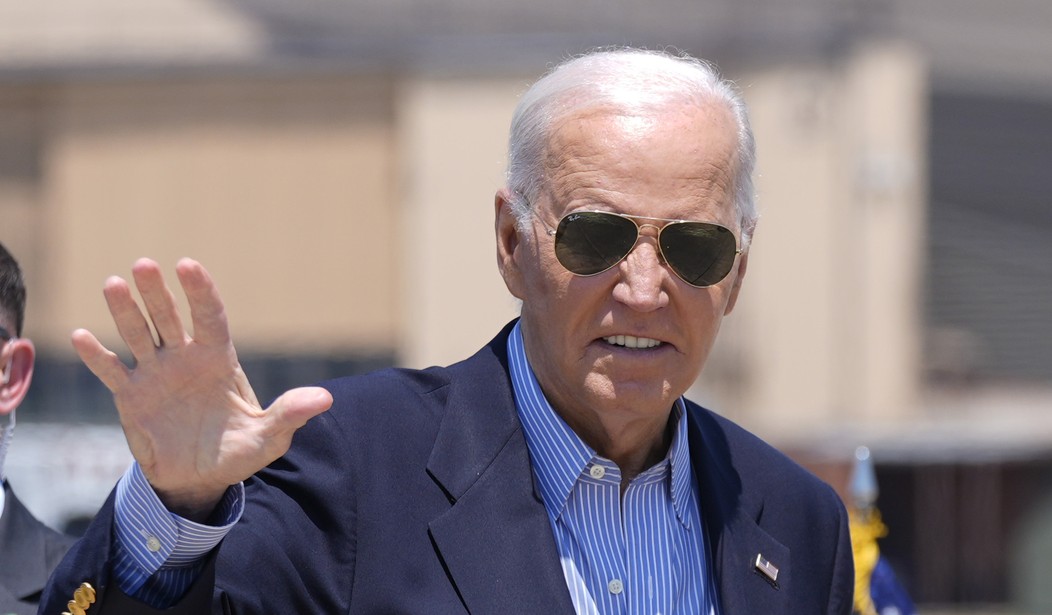
In April, Princeton University Press published a book titled "The Presidency of Joseph R. Biden: A First Historical Assessment." The book is basically a collection of historians and social scientists writing their first impressions of Biden's term, i.e. historically speaking what did he accomplish and where did he go wrong.
According to a NY Times opinion piece published today, the consensus of the book's authors is not especially favorable to Biden.
The administration was “an ominous interregnum,” writes one; Biden was “better suited for a time gone by,” offers another; his presidency “ended somewhere between tragedy and farce,” concludes one more...
Taken together, the historians’ assessments point to a recurring challenge for Biden: His substantive defeats at times offered temporary political advantages, but his major successes failed to deliver sustained political benefits. And that is how you become a one-term president.
Consider the Supreme Court’s 2022 decision in Dobbs v. Jackson Women’s Health Organization, which ended the constitutional right to abortion. Initial outrage against the ruling gave Biden and the Democrats “a potential political lifeline,” writes Mary Ziegler, a legal historian at the University of California, Davis, and provided a boost for the Democrats in the 2022 midterms. Yet Biden was “unable to channel the rage” that many Americans felt about the decision, Ziegler argues...
In a sense, Dobbs defeated the Democrats twice over. Not only did it undermine abortion rights, but by improving the party’s midterm performance, it reaffirmed the belief among Biden and his advisers that he had enough support, in the public and in the party, to seek re-election. We know how that turned out.
That was arguably the Democrats' best issue but there were a lot of other issues that dragged them down.
Persistent inflation and a permissive border policy became dead weight on the Democrats’ 2024 prospects, but even Biden’s signature accomplishments failed to deliver much political gain. “Biden defied cynics as he pushed through a massive legislative agenda during his first two years,” Zelizer writes, citing the American Rescue Plan, the Inflation Reduction Act and the Infrastructure Investment and Jobs Act. “However, legislative success did not translate into political strength.” His ambitious climate policies likewise “failed utterly as a political strategy,” writes Paul Sabin, a Yale historian, and “yielded few political benefits in the 2024 electoral campaign, where climate change was barely mentioned.”
It's common for a political party to put failures down to poor messaging rather than poor messengers, but in Biden's case the book notes he was barely even on the scene by the end of his presidency.
Biden — who, by late in his term, “had become among the most inaccessible presidents in modern history,” Timothy Naftali of Columbia University writes — did himself few favors on that front.
“He did not just fail to tout his achievements; he seldom even tried,” Michael Kazin, a historian at Georgetown, complains.
The article acknowledges his age was part of the problem but I think it still downplays it, suggesting that maybe part of the problem was that Biden wasn't personally behind everything his White House was doing. He was elected as a moderate and then immediately made himself America's first equity president, someone obsessed with trans issues.
Maybe there was an issue there but if so it was only because Biden's vacancy left so much room for far-left progressives to push whatever agenda they wanted in his name. In other words, all of these problems trace back to his age and the fact that his staff was hiding him from the public as much as possible. When he did have something to say it was usually vague partisan attacks aimed at Trump.
Biden wanted to save the nation’s soul, he told us repeatedly, which to him basically meant saving it from Donald Trump...
“Biden was an unlikely person to be put in charge of carrying out the grandiose mission of saving the nation’s soul,” Zelizer writes in the book’s introduction. The 46th president was never a particularly strong orator, especially so as he aged, and he had not yet articulated a distinctive vision of national identity and purpose. During the 2020 campaign, even Biden’s own pollster couldn’t make sense of it. “No one knows what this soul of America bullshit means,” he said.
I don't think it meant anything beyond a kind of vague nod to resistance politics which the White House knew were popular. Biden just wanted to remind people that he wasn't Trump and he succeeded in that. Unfortunately for him, after four years of his doddering performance as President--open borders, high inflation, closed schools, the trans agenda and constant lies about his mental condition-- Trump's term looked pretty good by comparison.
That's the ultimate verdict on Biden's presidency. Things were so bad that people got to thinking they'd made a mistake electing him and would switch back to the other guy.