I've written several posts about the leap that AI has made recently in the field of programming. Several people who are using the latest tools say that AI can now create apps from start to finish and produced results that actually work.
Today I noticed several stories about other areas where AI seems to be making great strides. First, in the realm of mathematics. Just a year ago, a math professor at the University of Toronto predicted AI wouldn't be able to write a serious math paper by 2030. Now he says he was wrong.
In March 2025, mathematician Daniel Litt made a bet. Despite the march of progress of artificial intelligence in many fields, he believed his subject was safe, wagering with a colleague that there was only a 25 per cent chance an AI could write a mathematical paper at the level of the best human mathematicians by 2030. Only a year later, he thinks he was wrong. “I now expect to lose this bet,” he declared on his blog.
Mathematicians have been taken aback by the speed of improvements in AI’s ability to solve problems and produce proofs. “A couple of years ago, they were basically useless for even solving high school math problems, and now they can sometimes solve problems that really appear in the research life of a mathematician,” says Litt, who is at the University of Toronto.
This progress is faster than many had predicted, with mathematicians warning that their profession is undergoing one of the fastest evolutions the field has ever seen. “We are running out of places to hide,” wrote Jeremy Avigad at Carnegie Mellon University in Pennsylvania in a recent essay. “We have to face up to the fact that AI will soon be able to prove theorems better than we can.”
Last month a math professor at Berkeley put together a test. It was 10 real-life problems taken from actual math research involving different areas of mathematics. The problems were publicized and AI researchers at tech companies used their latest tools to solve them. The results were pretty impressive.
OpenAI claims it answered half of the problems correctly, according to “feedback from experts”, while Google DeepMind scored 6 out of 10, according to mathematicians it consulted for each problem.
“Things have changed so fast,” says Thang Luong at Google DeepMind. “For us, now AI has really become a serious collaborator, either to produce serious research work or, in the case of First Proof, it can also actually propose a solution by itself.”
To be clear, these were real problems that real experts with math PhDs were solving as part of their work. The fact that AI tools could do 50-60% of these problems is pretty impressive. Even when it wasn't clear if the AI answers were correct, experts said the work looked comparable to post-grad students.
Ivan Smith at the University of Cambridge, who wasn’t involved in the Google effort, says the AI does appear to be taking a sensible approach to this problem and shows good progress. “If this was a PhD student coming back with their thoughts, it would be encouraging and would build confidence that the result was actually true,” says Smith.
Given the speed at which AI is developing, it probably won't be long before the tools can produce answers more quickly than the human experts can check them for errors.
What will the outcome of this be? Who knows? But it could lead to improvements in logistics, cryptography, engineering, finance and medicine. And that brings us to the other story out today about progress in medicine thanks to AI.
It's pretty widely known that the widespread use of antibiotics had led gradually to the development of so-called superbugs, which are basically drug-resistant strains of certain organisms that infect people.
For around half a century, humanity has been slowly losing its battle against bacteria. The most powerful weapons we have in this fight, antibiotics, are increasingly ineffective as drug resistance spreads. Around 1.1 million people now die every year from infections that were until recently easily treated. And the death toll is expected to rise to more than eight million by 2050 unless urgent action is taken.
Developing new antibiotics is a frustratingly slow and expensive process. Between 2017 and 2022, just 12 new antibiotics were approved for use, the majority of which were similar to existing drug-types that bacteria are already developing resistance to.
But AI shows real promise as a tool that can help us solve this problem. Professor James Collins from MIT used AI to train an AI model by looking at all of the existing antibiotics that we know work. He then used the AI to create new drugs.
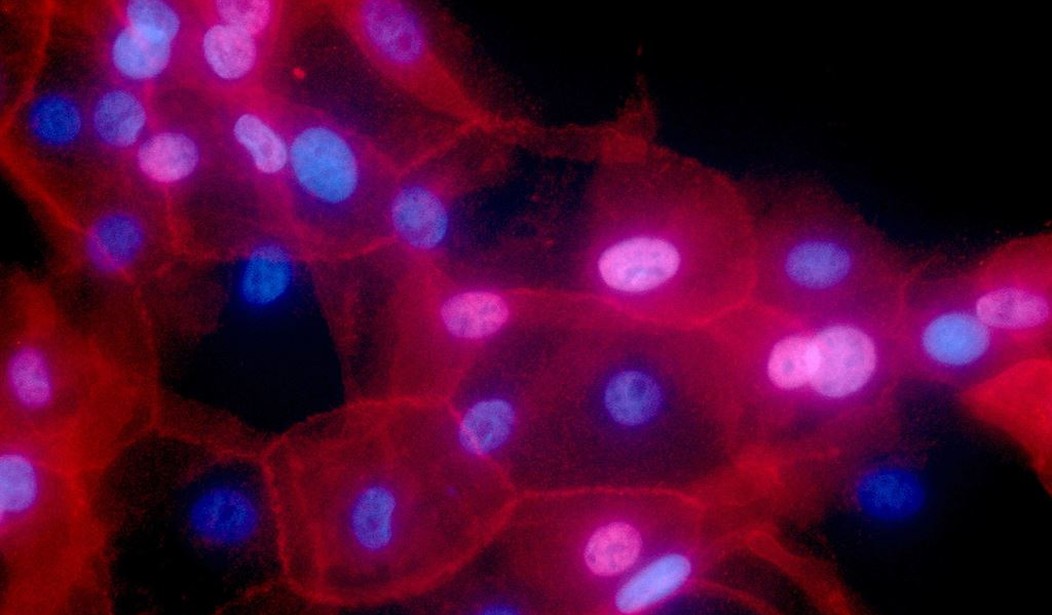
The researchers then used the AI to screen more than 45 million different chemical structures for their ability to target Neisseria gonorrhoeae, the bacteria that cause gonorrhoea, and Staphylococcus aureus, a significant source of infections in the form of MRSA.
Both of these bacteria are highly drug-resistant – in the case of gonorrhoea, it's able to evade almost every medicine used to treat it...
Collins and his colleagues designed 36 million compounds in this way with potential to work against the bacteria. The team selected 24 to synthesise in a laboratory. Seven proved to have some antimicrobial activity, and two were highly effective at killing strains of both bacteria that were resistant to other types of antibiotics.
Importantly, the compounds appear to target the bacteria in different ways to already existing antibiotics, raising hopes they could form a new class of medicines able to overcome the defences of drug-resistant bacteria. The two candidates are currently undergoing further testing.
The big advantage here is the speed with which medical researchers can consider new drugs. What used to take a team of people months and millions of dollars can now be done in a week for almost nothing thanks to AI.
With more traditional methods, scientists could screen around one million molecules in six months at the cost of several million pounds. "Now, you can do the same in a few days but screen billions of molecules, for the cost of a few thousand pounds."
It's not hard to imagine how that will potentially speed up the creation of new drugs and make the ones that get produced much cheaper. And the more these AI systems learn about the details of human proteins and the bacteria that plague us, the more accurate the AI will get in predicting new solutions to problems. It seems likely that in 10 years the entire field of medicine could have made quite a leap forward.
Obviously there are still lots of potential downsides to AI (including potentially putting a lot of people out of work) but there could be some big upsides as well. We live in interesting times.