
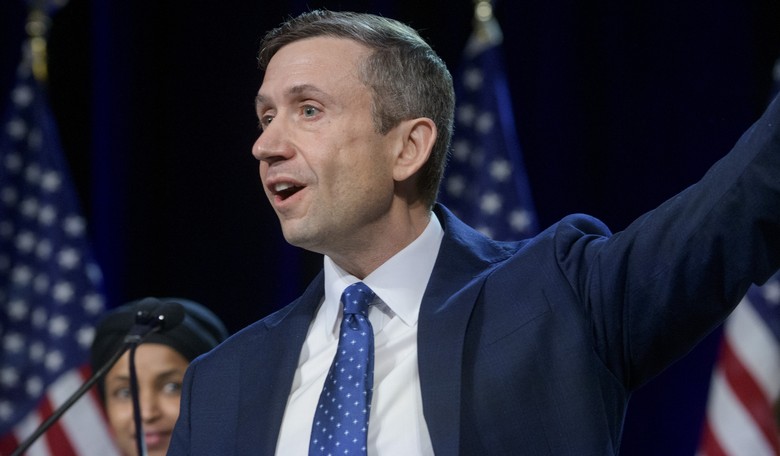
First, the DNC scheduled its presidential primary debates. Then, DNC Chair Ken Martin announced that the DNC would brook no debate over requiring formal denunciation of super PACs and so-called "dark money."
Unfortunately for Martin, he now has the debate that he tried to suppress.
Politico reports that the prerequisite denunciation of outside funding took Democrats by surprise, and now some are pushing back. They are pointing out, as I did, that this demand is entirely performative, not to mention a form of self-defenestration:
The Democratic National Committee is requiring candidates to denounce super PAC and dark money spending on their behalf if they want to participate in the party’s dozen primary debates. It’s a significant move by DNC Chair Ken Martin after a midterm in which voters empowered Democrats who vowed to curb money in politics.
But the pledge sparked immediate concern from aides to potential 2028 candidates and seasoned presidential campaign operatives. At best, they warn, the pledge is toothless — the candidates have no actual power over super PACs. At worst, they worry the effort could kneecap the party against both Republicans who rely on megadonor-powered super PACs and special-interest groups that regularly plow tens of millions of dollars into influencing primaries.
Some operatives also cautioned the DNC’s new strictures could disadvantage candidates without longstanding federal campaign accounts, such as governors, while boosting grassroots donor darlings or those who can self-fund.
Martin did get one surprising assent, who nonetheless pointed out how impotent the pledge actually would be:
“I gotta look at it. I can’t imagine I wouldn’t” sign it, former Ambassador Rahm Emanuel told Decoded by POLITICO. “I do think money in politics is a massive problem. But the only thing that I found a little interesting — you’re making a pledge for the primary that you can’t hold for the general.”
The problem isn't that candidates can't hold the pledge in the general election season. It's that they can't hold it at all. As Politico notes, super PACs operate outside the control of candidates and political parties. We might just as well demand that all candidates take the King Cnut Pledge to oppose high tide for all the good it will do. Everyone in the debate room, including the janitors, could sign the denunciation of super PACs, and the people who organize them will keep right on raising money and messaging to support their favored candidates and causes.
In fact, as one organizer points out, the pledge might backfire on Martin and his attempts to get money out of politics:
“It is admirable, and I totally respect it. … [But] this may be a case of good intentions leading to unintended outcomes,” said Rob Flaherty, a veteran of multiple Democratic presidential campaigns. “The dynamics of unilaterally disarming in this way sort of sets people up for hypocrisy accusations later and dump trucks of money getting dropped on their head now.”
Acceleration isn't the only problem. One leader of a major Democrat super PAC calls this a category error:
“It is not up to the DNC to get money out of politics. It’s up to Congress. And I think this effort is confusing, it’s not enforceable and I think it weakens us for the general election,” said Danielle Butterfield, who leads Priorities USA, a major Democratic super PAC that is running a $30 million digital campaign targeting likely GOP presidential contenders.
This is mostly true. To change the rules – to the extent the rules can change – Congress has to pass legislation, not the DNC. However, a president would have to sign the bill, which does make it relevant to Democrats' choice of nominee. All of this, though, is precisely what debates are meant to settle. Should Congress change the law, and if so, in what manner? Which nominees would support different forms of such bills, or not support them at all? That's a debate worth having, and that's the debate Martin tried to short-circuit with his struggle-session demand on all potential presidential candidates.
Martin short-circuited it because there is no real way to ban super PACs and "dark money." The U.S. Constitution protects free speech, especially political speech, and the right to assembly. That's all super PACs do. Congress can pass no laws limiting these rights. Congress can try to pass campaign finance laws, but its jurisdiction ends at "campaigns" and does not extend to general political speech. Democrats revile the Citizens United decision, but that was a straightforward First Amendment ruling.
As I noted yesterday, Congress created this mess in the first place with its convoluted attempts at campaign finance restrictions. Rather than allow money to go directly to candidates and parties, Congress spent decades creating artificial obstacles to prevent resources from being used by the people who would have the most to lose from toxic messaging and tactics. If we want to get rid of super PACs and "dark money," eliminate campaign-finance limits, end tax breaks for political non-profits (including parties and campaigns), and require immediate disclosure for all political contributions. The money would then flow directly to its intended end-beneficiaries, the middlemen PACs would disappear, and we'd have a lot less hypocrisy in politics.
Many might disagree with that approach. That's why we hold debates, though, rather than struggle sessions.