As usual, maintain skepticism over the prospects of any defamation claim pursued by a prominent holder of public office. But also, maintain the sense of adventure that will ensue when The Atlantic has to start complying with discovery.
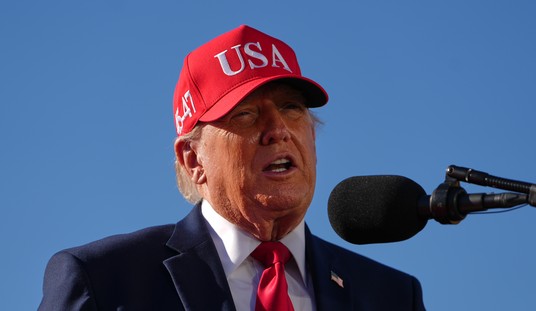
FBI Director Kash Patel warned The Atlantic to withdraw its claims that his drinking impacted Patel's work and that the bureau had to use "breaching equipment" to rescue him during a bender, among other allegations. The Atlantic refused to back down, so Patel followed up with a $250 million defamation suit. The legal action names the magazine as well as its reporter, Sarah Fitzpatrick, whose history may speak volumes during any trial:
The 19-page lawsuit, filed in the District of Columbia, is seeking $250 million in damages. Sarah Fitzpatrick, the reporter who wrote the story, is also named as a defendant.
Patel and the FBI have repeatedly denied allegations in the story, which included allegations that Patel often drinks to excess. The piece, which cited multiple unnamed current and former officials, also said that Patel's "irregular presence at FBI headquarters and in field offices" has delayed "time-sensitive decisions" that require the FBI director's input.
The lawsuit listed 17 allegations in the article that Patel's legal team alleges were "false and defamatory statements of fact," including that he "is known to drink to the point of obvious intoxication."
"Each of the foregoing statements and implications is false. They are so demonstrably and obviously false, or easily refuted, that it was at best reckless to publish them," the suit said.
First, let's take a close look at Fitzpatrick. Prior to writing for The Atlantic, Fitzpatrick worked for NBC News, where she broke another hot story against a conservative in public office. In September 2018, Fitzpatrick got the top byline on NBC's "scoop" that Brett Kavanaugh had run a gang-rape ring that targeted young women in 1982. A woman named Julie Swetnick had fronted this allegation with the assistance of her attorney, Michael Avenatti. Our friend Mark Judge also found himself targeted in this allegation as a member of this supposed gang-rape ring, and warned NBC that it was absolutely untrue:
The woman, Julie Swetnick, said that she was the victim of one of these gang rapes in approximately 1982. She did not allege that Kavanaugh participated in the rape, but said he and his friend Mark Judge were present when it occurred, adding that she was incapacitated by a drug placed in her drink without her consent and was unable to fight off her attackers.
She also said she saw Kavanaugh and Judge lined up at other parties "waiting for their 'turn' with a girl inside the room."
NBC News has not independently verified the accusations, and they were firmly denied by Kavanaugh.
"This is ridiculous and from the twilight zone," he said in a statement. "I don’t know who this is and this never happened.” An attorney for Mark Judge told NBC News that "Mr. Judge vehemently denies Ms. Swetnick’s allegations."
Beth Wilkinson, Kavanaugh's lawyer, said on CNN, "He has never met this woman, he doesn't know Ms. Swetnick. He didn't go to parties with her."
Note well the fact that NBC didn't bother to independently verify Swetnick's allegations before Fitzpatrick published them. That came back to bite them in the rear when Swetnick turned out to be a nutcase represented by a shyster. NBC's Kate Snow interviewed Swetnick a couple of weeks later, and her story fell apart rapidly under scrutiny. Senate Democrats who had cheered Swetnick initially distanced themselves very quickly afterward, and as it turned out, not even the people Swetnick claimed would back up her story knew anything about it. One of them didn't even know who Swetnick was when asked.
This track record may come up later in the lawsuit when it comes to establishing "actual malice" to meet the Sullivan standard on defamation cases. It doesn't appear in the 19-page complaint, but another report from MSNBC does, and that may matter even more toward the Sullivan standard. To understand this point in the lawsuit, let's take a look at the first three claims that Patel alleges are defamatory:
a. That Director Patel “is known to drink to the point of obvious intoxication, in many cases at the private club Ned’s in Washington, D.C., while in the presence of White House and other administration staff.”
b. That Director Patel “is also known to drink to excess at the PoodleRoom in Las Vegas, where he frequently spends parts of his weekends.”
c. That “[e]arly in his tenure, meetings and briefings had to be rescheduled for later in the day as a result of his alcohol-fueled nights.”
MSNBC aired a "suspiciously similar false claim" on its Morning Joe program with these same elements. Patel is already pursuing a defamation claim against MSNBC (now M-SNOW), although the channel retracted the report. The lawsuit alleges that The Atlantic and Fitzpatrick recycled claims from the retracted Morning Joe report, and that ignoring the retraction is clear evidence of actual malice:
20. The Article’s assertions that Director Patel drinks to the point of obvious intoxication at Ned’s in Washington, D.C. and to excess at the Poodle Room in Las Vegas, and that his drinking “has been a recurring source of concern across the government,” are false. Director Patel does not drink to excess at these establishments or anywhere else, and this has not, and has never been, a source of concern across the government. Prior to publication, the FBI expressly informed Defendants that each of these allegations was “totally false.” The FBI further warned Defendants that these allegations echoed a similar fabrication previously aired by MSNBC’s Frank Figliuzzi on Morning Joe—anonymously sourced reporting that was later retracted by MSNBC and that is the subject of pending defamation litigation—yet Defendants published it anyway. ...
46. Furthermore, in May 2025, a former FBI official made a suspiciously similar false claim about Director Patel on MSNBC’s Morning Joe. That anonymously sourced claim—that Director Patel had been “visible at nightclubs far more than he has been on the seventh floor of the Hoover building”—resulted in active, ongoing defamation litigation filed by Director Patel in the United States District Court for the Southern District of Texas. AD Williamson has publicly rebutted that claim and others like it, and MSNBC itself acknowledged the claim was a “misstatement” that had not been “verified.”
47. Defendants were aware of both the prior false statements and Director Patel’s vigorous public and legal refutation of them. The parallel between the Article’s “drink to excess at the Poodle Room in Las Vegas” narrative and the defamatory Morning Joe claim is unmistakable. Despite this, Defendants chose to publish a similar—and even more outlandish—set of false allegations, plainly drawing on the same currents of rumor that had already been publicly discredited and were in litigation.
48. The fact that Defendants elected to republish, in different form, claims that had already been debunked and were in active litigation is additional evidence that Defendants either knew their claims were false or acted with reckless disregard for the truth.
That will be a difficult point to refute. If MSNBC had already retracted those claims, then The Atlantic had good reason to know that these matters were already the subject of defamation litigation. Publishing the rehash from Fitzpatrick looks much closer to actual malice rather than just getting snookered by a source. Put that together with Fitzpatrick's track record on regurgitating nonsense allegations against prominent conservatives, and it starts looking like a tough case to win for The Atlantic.
The lawsuit doesn't use Fitzpatrick's past – yet – but makes it clear that Fitzpatrick should have known better than to trust her sources. Again:
44. The Article itself reveals that Defendants understood their sources were animated by hostility. Defendants relied on “former advisers” and “political operatives”—categories of sources with obvious axes to grind. Defendant Fitzpatrick knew this. As to the allegedly current officials cited in the Article, their animus toward Director Patel is readily apparent and known to Fitzpatrick, stating that such officials “have learned to roll their eyes at” at Director Patel’s actions, and one official going so far as to say “Part of me is glad he’s wasting his time on bullshit, because it’s less dangerous for rule of law, for the American public.” Also known to Fitzpatrick was that both the former and allegedly current sources lacked any legitimate access to the specific operational, security, and personal facts they purported to describe.
The cumulative weight of all this makes a pretty good argument for proceeding to discovery. That works in both directions, of course, which means The Atlantic can petition for internal communications at the FBI and Department of Justice that relate to Patel's behavior on and off the job. It also means that Patel and his attorneys can demand communications between Fitzpatrick and her editors at The Atlantic, internal discussions over editing and fact-checking, and most importantly, a demand for access to Fitzpatrick's sources. Fitzpatrick and The Atlantic will fight that, but their best defense at the moment would be to prove the allegations true in court after rehashing a discredited report – likely from the same sources – that M-SNOW retracted under pressure.
If these respondents were smart, they'd start sharpening pencils for a settlement conference before it comes to that. How smart, however, could The Atlantic's editors be if they had hired Fitzpatrick in the first place?