Look up pointless in the dictionary, and "negotiating with the IRGC regime in Iran" has to have an entry in the definition. The conference hosted by Pakistan in Islamabad provided an excellent, if frustrating, demonstration of this 47-year truth. Despite having nearly all of its traditional military assets destroyed and facing even more ruinous attacks, the regime's team refused to negotiate on any of the key points of the conflict – and demanded reparations from the US, as well as official recognition of sovereignty over the Strait of Hormuz.
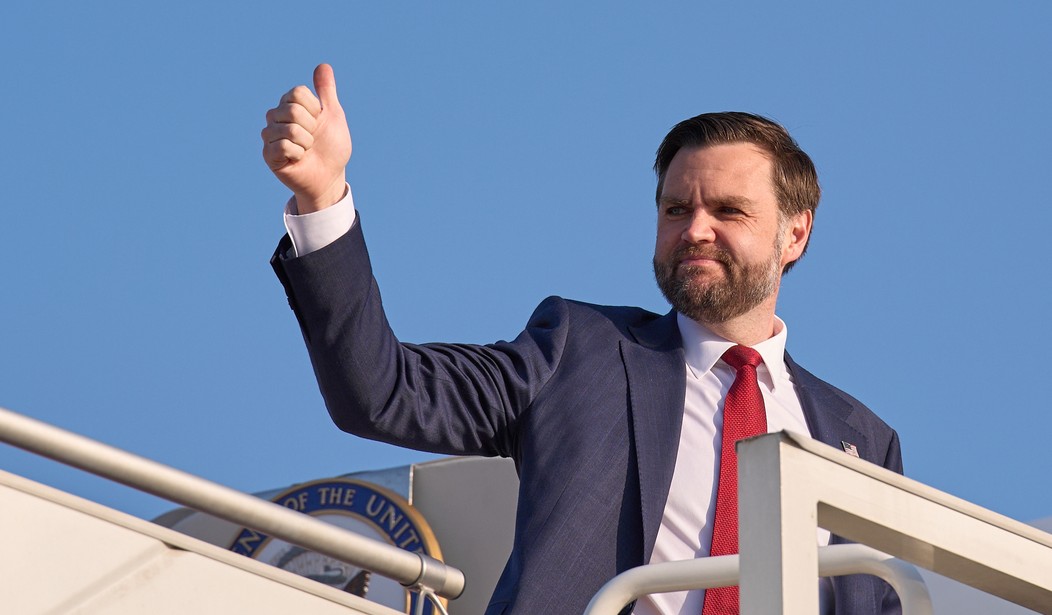
It was so pointless, in fact, that even J.D. Vance couldn't see any reason to stick around. He left after less than a day of negotiating for an end to the war he (reportedly) didn't favor in the first place. When you've lost Vance ... That's a clear measure of how useless the talks in Islamabad were.
Nonetheless, the same people who brought us these talks want to launch a new effort to, er, have the same conversation all over again. Call it a reunion tour for a band with no music to play. Axios reports on the effort, but notice the players and the supporting acts not on the bill at all:
Pakistani, Egyptian and Turkish mediators will continue talks with the U.S. and Iran in the coming days in an effort to bridge the remaining gaps and reach a deal to end the war, according to a regional source and a U.S. official.
Why it matters: All parties still believe a deal is possible. The mediators hope that narrowing the gaps could enable another round of negotiations before the ceasefire expires on April 21.
Why it doesn't matter: Look who's not sponsoring the Islamabad II: IRGC Boogaloo tour. None of the Gulf Cooperation Council states have participated in this effort. Five of the six have been attacked directly by Iran over the last six weeks, and even Oman got a few missiles sent in its direction despite their attempts to mediate the conflict before the war broke out. Turkey has seen a couple of missiles heading their way, but Turkey, Egypt, and Pakistan have not had much skin in this game since the war broke out. They also have limited exposure to issues relating to the Strait of Hormuz, at least in comparison to the other GCC states.
The GCC states want the threat from Iran's IRGC junta ended for good. They aren't pushing for a quick cease-fire with Iran claims of sovereignty over the Strait of Hormuz unresolved. Iran's ballistic missile attacks changed the calculus for the GCC states, so much so that Saudi Arabia reportedly talked Donald Trump out of using the ceasefire to declare victory and depart the field. TJV News claims via anonymous White House sources that Crown Prince Mohammed bin Salman pledged hundreds of billions of dollars in support of the war if Trump finished off the IRGC's ability to threaten the Gulf entirely:
Prior to the pivotal exchange, President Donald Trump had reportedly been prepared to announce a full cessation of hostilities with Iran. The anticipated agreement hinged on a critical concession from Tehran—the immediate reopening of the Strait of Hormuz, a vital artery of global energy commerce whose closure had sent shockwaves through international markets.
Such a declaration would have marked a decisive de-escalation, signaling a potential end to a period of heightened confrontation. Yet, as White House sources consistently emphasize, the calculus shifted abruptly following a direct appeal from Mohammed bin Salman.
According to those familiar with the conversation, the Saudi leader implored the American president to reconsider, characterizing the moment as a rare and historic opportunity to decisively weaken the Iranian regime. “This is a historic opportunity – we must finish the job,” he reportedly urged, framing continued pressure not merely as an option, but as a strategic imperative.
What followed was not simply a plea, but a meticulously constructed proposal—an expansive package of economic and strategic incentives designed to align American and Saudi interests in a prolonged campaign against Iran. White House sources describe the offer as unparalleled in both scale and ambition, encompassing a series of commitments that, taken together, amount to a transformative blueprint for the region.
TJV claims that MBS pledged $100 billion in direct financial support for the war and another trillion dollars in investments for the US economy. Is this on the level? Perhaps, perhaps not; so far, no other media outlet has reported anything corroborating the story. It certainly might explain why Vance was not inclined to stick around for more rug-merchant tactics from Abbas Araghchi in Islamabad after just 21 hours of talks set up by Pakistan.
Of course, the history of the regime's dishonesty in negotiations over its nuclear program (among other issues) could also explain Vance's lack of interest in further talks this weekend. The way Araghchi arrogantly blew up negotiations in February is just one part of that equation; the US and the world saw how Iran reneged on the JCPOA almost immediately despite getting all of its benefits up front. (Or perhaps because of it.) The regime's unreliability goes well beyond the past decade, however. It extends back more than twenty years on the nuclear-weapons development that Iran pursued:
People are familiar with the 2015 JCPOA, but most don't remember the 2004 Paris Agreement.
— Dr. Eli David (@DrEliDavid) April 13, 2026
In 2004, Iran agreed to COMPLETELY STOP URANIUM ENRICHMENT, but quickly breached the agreement by continuing it secretly until exposed.
Why would it be different this time?
_ pic.twitter.com/DhMCn0e0qC
The Paris Agreement came from another set of negotiations set up by interested parties only after the NCRI and its MEK partners revealed the nuclear-weapons development program in 2002. As Itay Ariely noted in his LinkedIn essay captured by Dr. Eli David, the MEK revealed that Iran had already violated the agreement by the next year and had begun prohibited enrichment activities in Natanz the year after that.
"Do you think it's going to be different this time?" Ariely asked.
Pakistan wants everyone to think so:
Pakistan's Defense Minister: U.S.-Iran negotiations expected to resume soon. "Only positive statements came after the latest round." pic.twitter.com/0JXjjQbrza
— Open Source Intel (@Osint613) April 13, 2026
Er ... wut? Iran continued to threaten shipping in the Strait, refused to discuss any of the issues in the conflict, and warned about escalating the conflict when the US walked away from the table. If Pakistan considers those "positive" developments, then they cannot be considered a serious or reliable partner in dealing with the regime in Tehran. We're better off sticking with the GCC states, which have a much more realistic approach to the IRGC.