
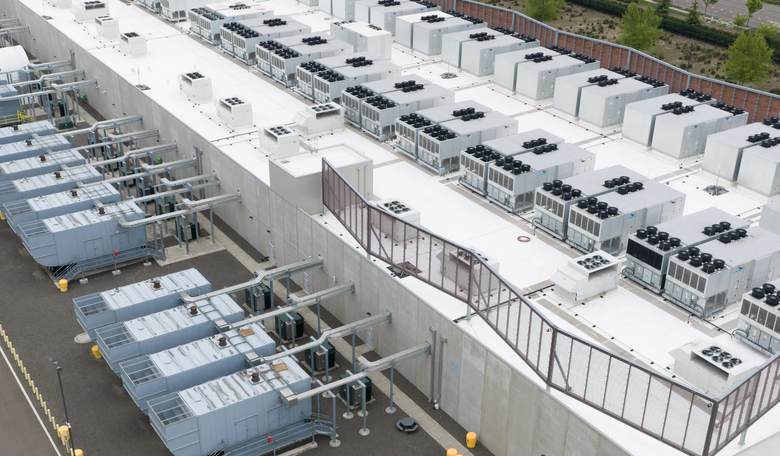
Are all decisions based on moral panics now?
It sure seems so. Rather than looking at policy questions rationally, everything gets boiled down to cartoonish caricatures with angels, devils, and knights in shining armor fighting it out.
We live in COVIDworld, where real and imaginary fears get blown entirely out of proportion; costs and benefits are no longer weighed against each other; and moral certainty replaces considered judgment. School closures, mask mandates, absurd vaccine mandates, closed basketball and skateboard parks, and chasing down lone surfers to arrest them for violating stay-at-home orders are characteristics of COVIDworld. Stupid overreactions to manageable problems.
The current moral panic centers on AI and data centers, each of which presents the sort of problems any new technology or industry would, but neither — especially data centers — is nearly as scary as it is made out to be. It's hype and moral panics all the way down.
Third worldism in action: facing a $150M deficit, the county is turning down a $5B project to keep a mall lot that's been abandoned for 24 years. 25,000 signatures for $0 in revenue. I guarantee the same people will be complaining about underfunded social programs next.
— Anthony Mansfield, M.S. (@mechamansfield) November 10, 2026
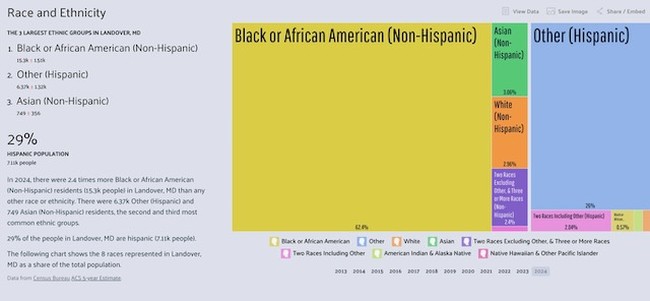
A perfect example is the data center project in Landover, Maryland, a depressed area filled with un- or under-employed single moms, laid-off federal employees, and some construction workers. It is overwhelmingly populated by minorities and has an immigrant population twice that of the national average.
 It is also home to the Washington Commanders (Redskins!!), who plan to leave in a couple of years.
Located in Prince William County, which itself is not doing that well at the moment, the city is run-down and clearly declining, and it desperately needs an infusion of tax money and new industries to revive it, or at least keep the lights on.
Mandated schools spending, employee pay and a massive state deficit are threatening to drive up county spending, a recent report states
Prince George’s County faces a projected $151 million deficit in next year’s budget, laying bare a grim fiscal reality that could lead to deep spending cuts, local tax hikes or some combination of the two.
The deficit projection comes from the spending affordability committee, which issues two revenue reports each year — one in October and another in January — to provide up-to-date figures as officials craft the next year’s budget.
The latest October report states that mandated increases in school spending, employee compensation and merit raises, and rising debt service expenses are driving the county’s future spending growth. The state’s multibillion-dollar deficit is threatening to increase costs for local governments, too.
Meanwhile, broader economic headwinds and mass federal layoffs are hurting the county’s revenue growth.
The county faced a $58 million deficit in January, as officials crafted the budget for this fiscal year, which runs from July 1, 2026, to June 30, 2027.
Higher than expected income tax revenue helped buoy this year’s budget. But economists anticipated earlier this year that Prince George’s County would begin to feel the financial pain from the Trump administration’s mass layoffs more acutely during next year’s budget cycle.
And deficits have nowhere to go but up.
A new data center was going to be a lifeline for the city and county, bringing in a billion dollars in capital investment, tens of millions of dollars in taxes, and revitalizing a run-down lot that has sat empty for decades after a mall closed. It is an eyesore, a liability for the city, and is less than worthless as it sits now.
But it is a data center, and data centers are BAD. I saw it on TikTok, which served me countless videos on how bad data centers are from...a data center. The people who are fighting data center expansions are addicted to the products that can only come from them.
When she heard about the data center, Taylor Frazier McCollum decided to do something about it. And she has plenty of time on her hands because she has little else to do — her hours and income were cut from the waxing salon she worked at, she lost her apartment to eviction, has a pile of debt she can't pay, and seems quite happy to spend her time organizing people, testifying to her city council, and considering her future in politics.
Unlike a lot of land-use activists trying to protect their homes from threats in their backyards, Frazier McCollum does not own a home. In 2024, she and her young daughter were evicted from their apartment. She was working at a waxing center that cut wages, and she could no longer cover her rent.
"It was difficult," Frazier McCollum recalled. "Because I created the ideal life paying for us to live in this apartment and have our own space ... and then to have it taken away ... It felt like something that wasn't ever going to end."
They've moved around and were living in her grandfather's home when she learned about the proposed project less than a mile away.
She created a petition that gathered over 25,000 signatures, leading to widely attended protests and culminating in multiple local moratoriums imposed on data centers throughout the county. It blocked the $5 billion project that was set to break ground between 2026 and 2027.
This collage shows women protesting with signs that say "No Data Centers," as well as photos of data centers, power lines and a person holding a smartphone.
The fight pushed Frazier McCollum to the forefront of local politics. She went to county meetings, testified before Maryland legislators and endorsed political candidates. She found herself in a coalition of socialists, environmentalists, people angry about their electric bills and neighbors new to organizing.
Local media interviewed her, and people in data center circles called her "the Landover girl."
Five billion dollars of investment, and she stopped it because she bought the hype that all the water would dry up and pollution would cover the city in toxic waste. She wants a sports complex built on the site using all that non-existent county money, which will run a $200 million deficit in two years.
"This is something that was happening in her neighborhood, and it was really like her awakening," Hartwell said.
But with data centers paused, some in Prince George's County worry about declining tax revenue. Last year, a local Six Flags closed. The NFL's Washington Commanders announced plans to return to neighboring Washington, D.C. Thousands of federal workers have lost their jobs. The county faces a budget deficit.
Weeds and cracked asphalt cover the site of the possible data center. If the project is built, the development will occupy more than 80 acres.
The possible data center site, which was once the Landover Mall, in Prince George's County. If the project is built, the development will occupy more than 80 acres.
In September, Frazier McCollum appeared at a county council meeting to advocate for a fund for roof repairs, something her grandfather's home needs. Council member Wanika Fisher, who supports moving some data center projects forward, reminded her that the county needs development.
"Our county has an economic future that we have to grapple with," said Fisher, addressing the request. "I don't see where the money is coming from. I think we have to have a real conversation. And I'm not saying that a data center is the answer, but I'm saying it's worth the hard discussion."
Gee, industries are fleeing, the property tax base, which relies on a declining base of commercial property, is collapsing, expenses are exploding, and the solution is socialism. Because of course it is.
One good thing has come out of this: Frazier McCollum has a new mission in life and a new source of income: she is a political activist now, and planning a political future once she gets back on her feet.
With the Landover project on hold, Frazier McCollum now wants a full ban on that and other data center projects. And with grants Hartwell and others have found, Frazier McCollum has taken her message to Black communities fighting data center growth in Atlanta, Memphis and even across the globe in Zambia.
"I feel like so many people are depending on this fight to be successful," Frazier McCollum explained. "Not just for myself, but even across the country, to set precedent for other people that are fighting against hyperscale data centers."
She's lost out on work to attend public meetings or knock on doors, and she's relied on family for rides and childcare.
Her father, Lacy McCollum Jr., sees the data center fight as rooted in civil rights.
"We're talking about the right to water, the right to clean air, the right to a place to live. That's everybody's fight, right?" Lacy McCollum Jr. said. "While I'm afraid for her, we need those people. We needed the Medgar Everses. We needed the Martin Luther Kings. We needed the Malcolm X's. People like Taylor, they jump out here so the people behind them get to make progress."
Some urge her to run for office. She says she wants to pay off her debt and traffic tickets and find a home first.
Can any political battle be more absurd than this? A single mom who can't support herself fighting an economic lifeline for a declining community with nothing but red ink in its future, an underemployed minority population, urban blight, and an excess of grievance everywhere.
It's economic suicide, and the socialists are helping fund it all to ensure that the conditions for the coming revolution keep on expanding.
Taylor, who can't make ends meet like many of her neighbors, saw an opportunity for economic growth and to relieve the blight, and said, "Oh, hell no."
2026 in a nutshell. COVIDworld morality plays, only this time with the socialists in charge.