








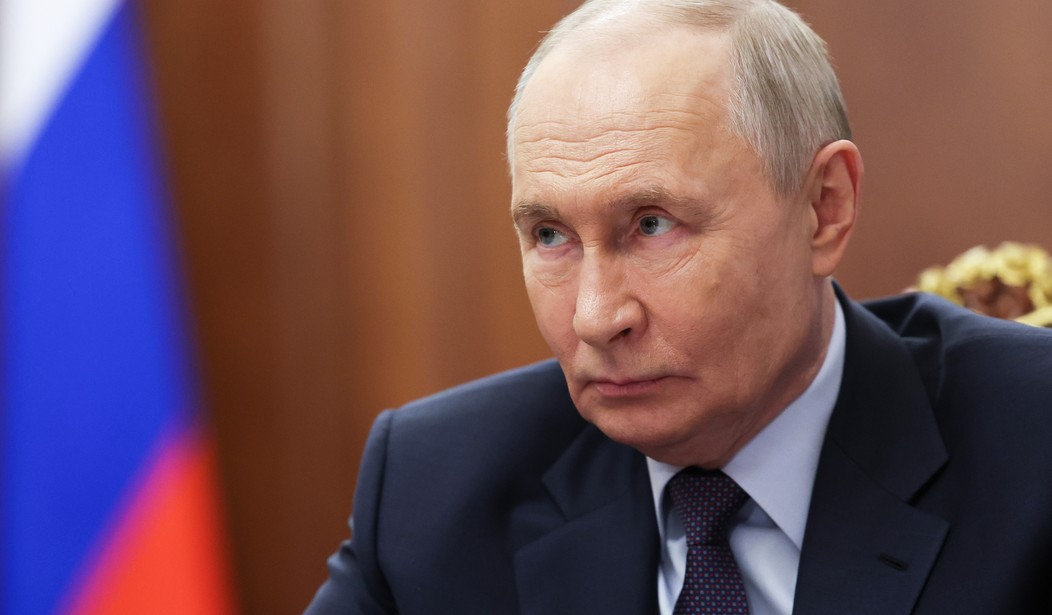
Earlier today, John reported on the fuel shortage in Crimea and the devastating impact it has had on both the peninsula's residents and Russian morale.
Crimea, you see, is the go-to vacation spot for the middle class in Russia, who can enjoy what little fine weather they get to experience, warm beaches, and summer camps for kids. Only the peninsula is closed for business, and the only fuel available goes to the military. There are now rolling blackouts, no streetlights, and no civilian traffic, including farm machinery, able to move.
Ukraine has been following a strategy of turning Ukraine into an "island" of sorts, meaning that few, if any, supplies can get from Russia. Food imports are reduced, leading to shortages, and the region feels under siege.
If that were Russia's only problem, it would be a big one, but hardly a war-losing setback. Russia would be able to keep Crimea fed enough, and its war machine supplied enough, that it would be in no danger of losing Crimea. And it's not like Putin cares much about how comfortable or happy civilians are.
MORE: The Kerch Strait strikes are part of an ongoing systematic Ukrainian campaign to deny Russian forces the use of the main ground lines of communication (GLOCs) to occupied Crimea via occupied southern Ukraine. ⬇️
— Institute for the Study of War (@TheStudyofWar) June 22, 2026
Ukrainian strikes on Russian oil and transport infrastructure… https://t.co/MjVoxLvHOG pic.twitter.com/ckmBSFxuKp
MORE: The Kerch Strait strikes are part of an ongoing systematic Ukrainian campaign to deny Russian forces the use of the main ground lines of communication (GLOCs) to occupied Crimea via occupied southern Ukraine. ⬇️
Ukrainian strikes on Russian oil and transport infrastructure are already disrupting Russian logistics, straining energy supplies, and worsening fuel shortages across occupied Crimea.
Russia has two main GLOCs into occupied Crimea — the “land bridge” that runs across occupied Donetsk, Zaporizhia, and Kherson oblasts and the bridge and ferry connection across the Kerch Strait.
Ukrainian forces have notably intensified their strikes against Russian GLOCs and energy infrastructure in occupied Kherson Oblast and Crimea in June 2026 after launching a simultaneous effort in May 2026 to deny Russian forces the use of the “land bridge.”
Ukrainian forces are also conducting targeted strikes on Russian air defense and radar systems to enable further strikes against Russian logistics and are striking various oil infrastructure, such as gas compression stations, to deny Russian forces the ability to store fuel in occupied Crimea.
A combination of continued Ukrainian intermediate- and long-range drone strikes may further impose additional tactical to operational-level dilemmas on Russian transport of personnel and equipment along both GLOCs and disrupt Russian fuel deliveries.
Russia has much bigger problems; it is nowhere near the battlefield where tactical warfare takes place, and Crimea's troubles are far from the biggest Russia is facing.
Air defense mania in Moscow, as units are moved from all across the country to the capital.
— Jay in Kyiv (@JayinKyiv) June 22, 2026
Russians again falling into the trap as Ukraine likely sets to shred oil infrastructure across the far-away regions.pic.twitter.com/DrL4iPtNwF
Russia's big problem is the growing number of gaps in its air defense layers, not just near the battlefield but across Russia. Ukraine has been systematically, if slowly, dismantling Russia's layered defenses and creating significant enough holes through which its drones and occasional cruise missiles can strike vital strategic assets that directly impact Russia's ability to conduct war, and even the Russian elite's sense of invulnerability.
The fuel shortages extend well beyond Crimea. Fuel is short even within Russia proper, and Moscow is having to import refined fuels as its own refining capacity gets hammered by the Ukrainians.
🇷🇺🇺🇦 Ukraine's Storm Shadow cruise missile damaged Russia's Voronezh Semiconductor Plant that produces Iskander & Kh-101 systems
— Lord Bebo (@MyLordBebo) June 22, 2026
A missile threat had previously been declared in the region. Locals post images of large plumes of smoke rising over the city.
Collateral damage… pic.twitter.com/7bT5PP9Mqi
While it is difficult to tell how significant the strikes on military production facilities are, they are now happening with regularity, likely restricting production capacity of the very weapons Russia is using in its war with Ukraine. Russia still relies, to a great degree, on expensive and difficult to manufacture in quantity weapons systems, and is generally less nimble than Ukraine in adjusting to battlefield conditions.
Ukraine has a rapid production cycle of inexpensive but effective weapons, and while Russia is not without similar capabilities in some respects—using more glide bombs and Shahed drones, for instance—it is simply not as nimble as Ukraine, and has a much bigger problem with corruption, if you can believe it.
🇺🇦🇷🇺 In just one week, Ukraine has dealt huge blows on Russia:
— Megatron (@Megatron_ron) June 22, 2026
- Massive Drone strike on Kapotnya Oil Refinery in Moscow disrupting ~40% of Moscow’s fuel supply
- One of the largest Ukrainian drone attacks on Moscow (~200 drones reported).
- Kapotnya Oil Refinery hit again… pic.twitter.com/JJ2lUrB4iW
🇺🇦🇷🇺 In just one week, Ukraine has dealt huge blows on Russia:
- Massive Drone strike on Kapotnya Oil Refinery in Moscow disrupting ~40% of Moscow’s fuel supply
- One of the largest Ukrainian drone attacks on Moscow (~200 drones reported).
- Kapotnya Oil Refinery hit again (second time in days), causing major fires, explosions, and visible damage. Airports temporarily closed; debris affected areas.
- A direct hit on a semiconductor factory in Voronezh, Russia with a British Storm shadow missile. The Semiconductor Devices Plant produces parts for air defense, ballistic and cruise missiles.
- Crimea oil restrictions after Ukrainian drone attacks on oil storage facilities
And, given attacks on Russia's oil industry, the money is not flowing fast enough to keep the war effort going without imposing very high costs on an ever more fragile economy.
In other words, Russia is plugging its budget deficit by lending money to banks so they can lend money to the government so it can spend money it doesn’t have. The macroeconomic equivalent of Putin Venmoing himself.
— Jessica Berlin (@berlin_bridge) June 22, 2026
Looks like Ukrainian long-range sanctions are working 💥 https://t.co/rumDZA3HJA
Ukraine is now striking very deep into Russia—over 1200 miles inside in one case, and it is still ramping up its capabilities as Russia's air defenses keep taking hits.
In light of all these problems, there is talk—hard to know how credible—of Belarus giving up its "neutrality" in the war and directly entering it to create a second front.
It's hard to know how seriously to take this—Belarus opposition forces are warning about it, but then again, they have every reason to sound the warning—and it's hard to see how Belarus benefits in the least, unless Moscow makes extraordinary promises that it may or may not be able to keep.
Of course, Russia is hardly about to collapse. But it no longer has the illusion of immunity. When Moscow and St. Petersburg can be hit regularly, every Russian knows that winning the war is not a sure thing.
Russia has been able to hit Kyiv whenever it wanted to, and still can. What's new is that there is nowhere under Russian control, save perhaps Kaliningrad, that is immune to attack. Ukraine isn't going to send its drones over Polish or Lithuanian territory to strike there, but then again, there is no tactical value to doing so.
Putin is seeing his set of options diminish. On the battlefield, he is facing a stalemate, and strategically, he is paying a higher cost than Ukraine by continuing the war.
That hardly means that he is about to give up. Losing the war is not a great option either, and declaring victory and going home is unlikely to be in the cards.
All we can say is that 2026 is turning out to be a very bad year for him.
Editor's Note: Do you enjoy HotAir's conservative reporting that takes on the radical left and woke media? Support our work so that we can continue to bring you the truth.
Join HotAir VIP and use promo code FIGHT to receive 60% off your membership.
Join the Conversation
VIP members get the ability to comment on articles.