







Nobody wants to talk about it, because the subject is still politically touchy.
But countries that were, not so long ago, implacable enemies of Israel have not just made their peace with the existence of the Jewish state, but (almost) openly allied with it both economically and militarily.
From @WSJopinion: The Gulf states have opened their eyes, and a diplomatic window of opportunity has opened. What looks today like regional escalation may prove to be the founding moment of a new regional order, writes @ShimonRefaeli.https://t.co/8uLyJRPdH2
— The Wall Street Journal (@WSJ) March 4, 2026
It would be a mistake to assume that the implicit alliance with Israel began with Operation Epic Fury or Israel's Roaring Lion. Everybody knows that Iran has attacked a range of Arab countries with its retaliatory strikes, so it makes sense that these Arab countries would join in the hostilities in one way or another without regard to Israel's participation.
But actually, that's not true. During the 12-day war last year, several Arab countries, including Qatar, Saudi Arabia, and Jordan, went out of their way to provide air defense assets to Israel.
It wasn't highly advertised, of course, but they were there when it counted.
Which brings up an interesting thought: is the "Arab Street," that almost mythical sense of what the masses in Muslim countries, not quite so implacably hostile to Israel anymore? After all, we haven't seen mass uprisings or protests against allying with the Great Satan or the Little Satan; in fact, Sunni Muslims seem to hate Shiites more than Jews.
Arab countries have been proscribing the Muslim Brotherhood, tamping down the rhetoric, and exposing their economies to a very vibrant and modern Israeli economy.
BREAKING: The United Arab Emirates is restricting their nationals from enrolling at British universities over fears that UK campuses are being radicalized by radical Islamist groups.
— George (@BehizyTweets) January 9, 2026
THIS IS BEYOND HILARIOUS! The UAE has a lower tolerance for radical Islam than the freaking UK. pic.twitter.com/Z38Cv3Quv6
Twenty-five years ago, it would have been shocking to imagine we have reached a point where Islamists are more welcome in the UK or France than in most Middle East countries, but there it is.
All of this has happened under Trump, first with the Abraham Accords, and now with strong leadership that gives Arab leaders a strong sense that they are betting on a winner.
The regime in Tehran sought to expand the battlefield to apply pressure. Instead, it consolidated the moderate camp. Countries that were conflicted, divided or neutral suddenly found themselves on the same side as Israel. For them, Iran is no longer a distant enemy; it is a home-front enemy.
This is a strategic opportunity for the U.S. and Israel. Iran’s attack exposed the vulnerability of the region’s traditional security structure. It demonstrated that there is no longer room for strategic neutrality. In the face of ballistic missiles and long-range drones, diplomatic condemnations aren’t enough. A permanent, coordinated mechanism is required, a true regional defense system.
The Abraham Alliance would be a military and political watershed, serving three functions:
• An alliance based on diplomatic peace as well as shared defense against Iran and its proxies.
• An alliance that includes the U.S., Israel and the other countries that have experienced or that fear exposure to an Iranian threat.
• A permanent security cooperation mechanism that can operate as a kind of regional North Atlantic Treaty Organization, integrating intelligence, interception, operational coordination and joint deterrence.
Establishing the alliance means that when missiles are again directed at Saudi Arabia, Bahrain, Kuwait, the United Arab Emirates or Jordan, the response won’t be local and isolated but regional and integrated.
The big strategic question is whether the regional alliance relies solely on the Iranian threat. If so, would the fall of the Tehran regime drain the alliance of substance? The answer is no. The Iranian threat is a catalyst but not the sole foundation.
Even if the regime in Tehran is replaced by a more moderate government, the Middle East will continue to face cross-border security challenges: proxy networks, instability in Syria and Iraq, threats in the maritime domain, and competition for regional influence. A new axis could emerge, for example, around movements associated with the Muslim Brotherhood led by Turkey and Qatar.
A regional alliance could evolve from a mechanism to contain Iran into a broader framework for regional stabilization and deterrence.
Donald Trump is breaking the post-Cold War assumptions in foreign policy and rewriting the strategic rules. Campus radicals in America, and antisemitic professors and transnational elites are much more hostile to Israel than Saudi Arabia or even Qatar.
The international establishment can't wrap its head around the new reality, nor the opportunities that the changes in strategic alliances promise.
Winning the Iran war, or whatever you want to call it, has the potential to reshape the Middle East for decades to come. Especially if the new Iranian regime is relatively moderate, as we can hope, if not expect, yet.
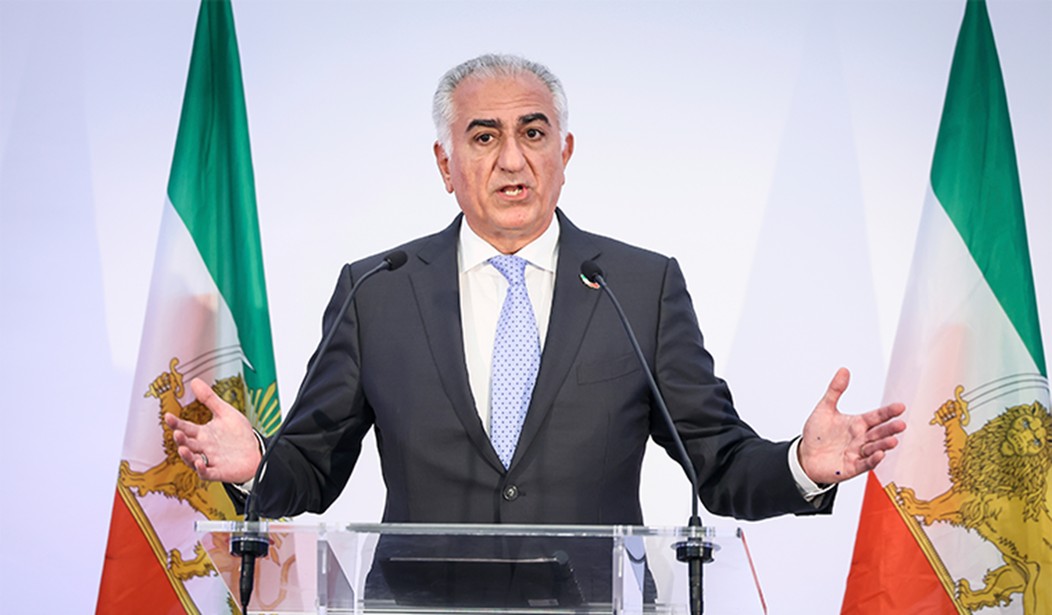
In the1970s the Middle East was divided between Arab states hostile to Israel and an alliance of Israel, Iran, and the United States. Since the Iranian revolution, the Arab states remained enemies with Iran, had reasonable relations with the US, and a mostly hostile peace with Israel.
Could we soon see a new alignment, with Israel, the Arab states, and even Iran coexisting well together?
We can hope.
Editor's note: If we thought our job in pushing back against the Academia/media/Democrat censorship complex was over with the election, think again. This is going to be a long fight. If you want to join the conversation in the comments -- and support independent platforms -- why not join our VIP Membership program? Choose VIP to support Hot Air and access our premium content, VIP Gold to extend your access to all Townhall Media platforms and participate in this show, or VIP Platinum to get access to even more content and discounts on merchandise. Use the promo code FIGHT to join or to upgrade your existing membership level today, and get 60% off!

Join the Conversation
VIP members get the ability to comment on articles.