When people talk about the wonders of socialized medicine, they talk as if it were free and as comprehensive as the health care available in the United States.
Neither of these things is true. Although the United States' health care policies are disastrous in their own ways—particularly with regard to its reliance on third-party payer systems, scammy Pharmacy Benefit Managers, and a highly bureaucratized hybrid public/private system that drives costs through the roof and provides no transparency, the socialized health care systems in most other countries are grossly inferior.
Before you point to lifespan differences between countries, know that you are not comparing apples to apples. Most Western countries classify neonatal deaths very differently, such as listing as stillborn infants who do not make it out of the hospital. They also do not account for the vastly different population demographics of the US compared with countries such as Japan or the Nordic countries.
If you compare similar population groups in the US and our peers, we look pretty good, even though our lifestyle choices tend to be far worse.
Diseases that are routinely treated quickly and efficiently in the United States get little, no, or long-delayed treatment in many peer countries. That is especially true in Canada and the UK, which are the systems most commonly referred to as superior to our own.
Canadian clothes retailer Simons is actually using suicide to market their products.
— Ian Miles Cheong (@ianmiles) November 27, 2022
No, this isn’t made up. It’s part of a sweeping effort to introduce medically assisted suicide as a treatment for mental illness, PTSD and even children with defects in Canada. pic.twitter.com/LdTH8fLq9I
In Canada, it is incredibly difficult to get treatment for health conditions that are not common, and even common conditions, such as needing a hip replacement, can result in long wait times while experiencing excruciating pain. In contrast, my wife saw an orthopedic surgeon quickly and was able to get an arthroscopic hip replacement in little time at all here in Minnesota.
Socialized medicine in Canada has created a situation where getting approved for MAiD is much easier than getting treatment for many health conditions.
Canadian Woman Approved for Assisted Suicide Instead of Getting Surgery https://t.co/1LDBVySulD pic.twitter.com/enF5Sm1pQ3
— LifeNews.com (@LifeNewsHQ) December 8, 2025
The woman in that lovely commercial celebrating suicide was not dying; she was just denied care in Canada. They left that part out of the little movie they made, but Canadian TV confirmed that they had interviewed her about her troubles getting care.
Last week, CTV confirmed that Hatch was the same woman who had spoken to them in June about her failed attempts to find proper treatment for Ehlers-Danlos syndrome, a rare and painful condition in which patients suffer from excessively fragile skin and connective tissues.
“I feel like I’m falling through the cracks so if I’m not able to access health care am I then able to access death care?’ And that’s what led me to look into MAID,” Hatch told CTV in June under a pseudonym.
Like more than a million British Columbians, Hatch was left without primary care after her family doctor moved away. And so, after her Ehlers-Danlos diagnosis 10 years ago, Hatch’s treatment had largely consisted of a chaotic and ineffective stream of specialist appointments, none of whom had any background in her condition.
“It is far easier to let go than keep fighting,” she told CTV.
In contrast, the Canadian health care system is substituting Medical Assistance in Dying for treatment in cases where the government decides to abandon the treatment of complex health care problems. Are you a soldier with PTSD? Have you considered death as a treatment?
Are you a Paralympian who has won medals for your country but needs access to a stair climber in your house? Death.
How about depression or poverty? Death.
Or, in this case, have a complex case of parathyroid disease that causes the buildup of calcium in the kidneys and excruciating pain? There's surgery available to help cure that, but unfortunately, she can't get it because she can't see an endocrinologist because they are full up on patients.
A Saskatchewan woman says she is considering medical assistance in dying (MAID) because she can’t get the surgery she desperately needs.
For the past eight years, Jolene Van Alstine has suffered from a rare form of parathyroid disease, normocalcemic primary hyperparathryroidism (nPHPT).
It causes extreme bone pain, nausea and vomiting.
“Every day I get up and I'm sick to my stomach and I throw up and I throw up,” Van Alstine said.
She visited the provincial legislature on Tuesday to plead for help getting surgery to remove her remaining parathyroid gland.
Currently there is no Saskatchewan surgeon able to perform the operation.
Van Alstine said she must be referred out of province, but she can’t obtain a referral without first being seen by an endocrinologist — and none of them are accepting new patients.
Van Alstine said the pain has become so unbearable that she has applied and been approved for MAID on Jan. 7.
The surgery isn't even that complex, although longer-term care may be. The biggest hurdle is getting an appointment so she can see a surgeon in a different province.
All health care systems have problems with limited resources, of course, and admittedly, the United States does a horrible job of allocating the enormous resources we pour into the system.
Leaving aside the cost to run the insurance companies themselves, which are basically 100% administrative costs, hospitals spend about 40% of their budgets on administrative expenses. One of the reasons you see fewer private practitioners anymore and most doctors are associated with large health care systems is that small practices cannot handle the administrative burden. Health care providers are becoming bureaucracies with medical services attached.
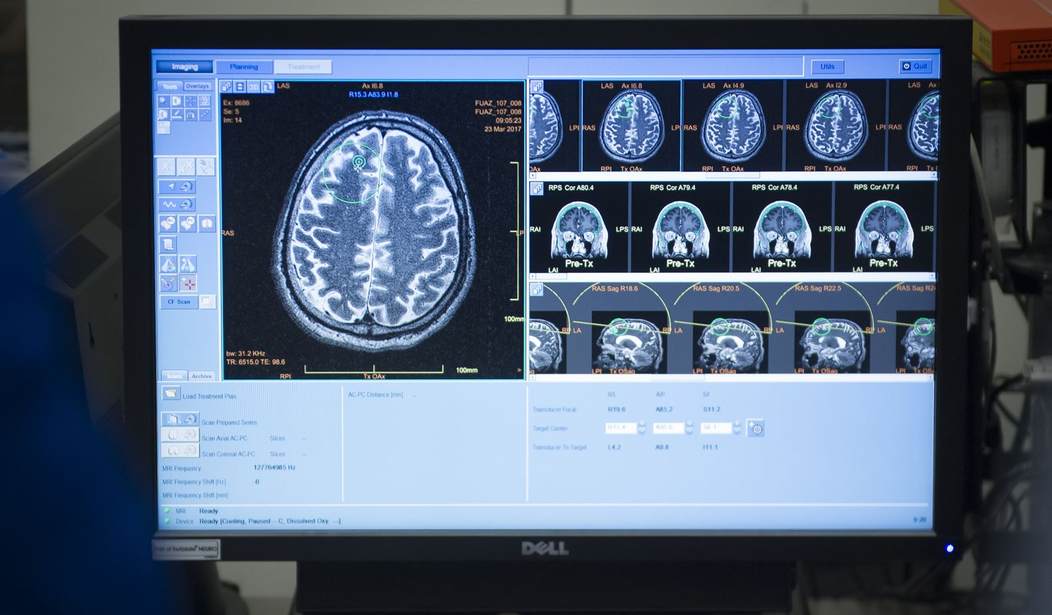
But we still do provide medical services. Many socialized health care systems seem to want out of that business. You can get routine treatments, although often after long waits and in pretty run-down circumstances, but don't you dare get seriously ill. For instance, there are 3.5 times as many MRI machines per capita in the US as in Canada.
MAID is killing Canadians who aren’t terminally ill — but merely disabled or lonely. How did we get here? Today, I asked the Premier to stop this. pic.twitter.com/jc2Hpp0ci4
— Tara Armstrong (@TaraArmstrongBC) October 23, 2025
There is one CT scanner per four people in the United States, and only 1.4 per hundred thousand in Canada. This translates into long delays for diagnosis and worse prognoses for treatment.
Have you considered death?
Great Britain looks across the pond and sees a model in Canada's health care system. Labour is pushing hard to institute MAiD to help lower costs in their creaky health care system.
Our hybrid health care system has a problem with cost, and socialized health care systems have a problem with limited resources. Because the United States is far wealthier than countries with socialized health care, the system chugs along, providing generally excellent care at outrageously high prices that could be easily slashed with reforms.
The solution is surely not moving in the socialized direction, though. That way leads to bureaucrats prescribing a cheap death over a more expensive treatment path.
Unfortunately, the people in power in Western countries don't have the will to reform their respective health care systems. Managed decline and blame-shifting are far easier than reforms that will empower patients in socialized systems and lower costs in our fake-free-market system.
Prescribing death for the costly seems the easier path.
- Editor’s Note: The Democrat Party has never been less popular as voters reject its globalist agenda.
Help us continue exposing Democrats' plans to lead America down a dangerous path. Join Hot Air VIP and use promo code FIGHT to get 60% off your membership!











Join the conversation as a VIP Member