Pollsters want you to believe that they practice something called "social science." They use scientific means to calculate likely outcomes that should, in principle, be correct in 95% of cases within a calculated margin of error.
In a prior life, I studied political science, although my specialty was political philosophy. In order to get a political science (or pretty much any social science) you must become proficient enough in the methodologies used in the discipline to understand how studies are conducted, what their strengths and weaknesses are, how things can go wrong, and how to interpret the results.
What I learned in the late 80s and 90s is that polling is not a science but, at best, an art masquerading as one. That's not to say that polling is useless, or that if done well, it can't tell you very important things. But all the statistical mumbo jumbo that people use to convince you that the results are accurate because the statistical techniques they use are akin to those used in the physical sciences is complete BS.
New Emerson College poll has next week's #TN07 special neck-and-neck. Trump carried the district by 22 points pic.twitter.com/hzziC9EviB
— Kirk A. Bado (@kirk_bado) November 26, 2025
Polls are based on modeling the population being surveyed, because the essential element that makes polling, even in principle, possible is gathering a random sample to use. Random samples are hard to get, even in the physical sciences. In the social sciences they are essentially impossible to get, so the best one can do is make assumptions about what a random sample SHOULD look like and then gather data from the modeled population.
In an election, that means basing everything on what you think the electorate will look like. You can't just make 500 or 1000 phone calls and call it a day, or put up an internet survey or text a random group of people. (Yes, most polls use all 3 methods). If you have ever participated in an internet poll, you will immediately see the problem with that method—answer a poll on X, and you will see very lopsided results because the people who choose to answer (or even see the poll) are not randomly selected.
And that's before you get to any potential bias introduced by the pollsters. It's really hard to get a good, unbiased sample. The best-intentioned, most objective pollster in the world will get garbage results if their model of the electorate is wrong, and public pollsters are often not well-intentioned and unbiased to begin with.
The Emerson/Hill poll that predicted a razor-thin race in TN-07 was, it appears, WAAAYYYYY off from reality for at least one simple reason: their model sucked. They predicted who would turn out to vote based on flawed assumptions, and reality bit them in the butt.
Reporters at the Tennessee Star, who had significant insight on the ground, doubted the results from Emerson and wondered why their results seemed so at variance from what they expected, and got interresting answers:
Emerson College Polling Senior Director Matt Taglia acknowledged to The Tennessee Star on Wednesday that the methodology for the organization’s survey of voters in Tennessee’s 7th Congressional District special election anticipated fewer supporters of President Donald Trump to cast a ballot than in 2024.
After The Star noted that both President Donald Trump and former U.S. House Representative Mark Green won their 2024 elections in 20-point landslides, Taglia confirmed to The Star that pollsters expect reduced turnout among the president’s supporters.
Taglia told The Star, “there is likely to be fewer Trump voters relative to 2024 for the special election,” according to their estimation. He stated, “This is based on a combination of factors, including updated voter registration data, prior electoral performance, and early voting data.”
He also disputed that the decision to create a sample including a smaller share of Trump voters than were part of the 2024 electorate meant there was a disproportionate number of Democrats included in the poll, and noted that one quarter of respondents were not registered with a major political party.
You see the problem? One need not assume that Emerson or The Hill wanted to influence the vote by creating the impression that the race was closer than it was, although one might have suspicions. All you need to know in order to doubt the quality of the poll was that it was based on WAGs (wild-assed guesses).
Polling was never easy, but there was a time when collecting random samples was easier. Most people had home phones they answered and the country was somewhat more homogenous. The samples were still imperfect, but the problems pollsters faced paled in comparison to today's world.
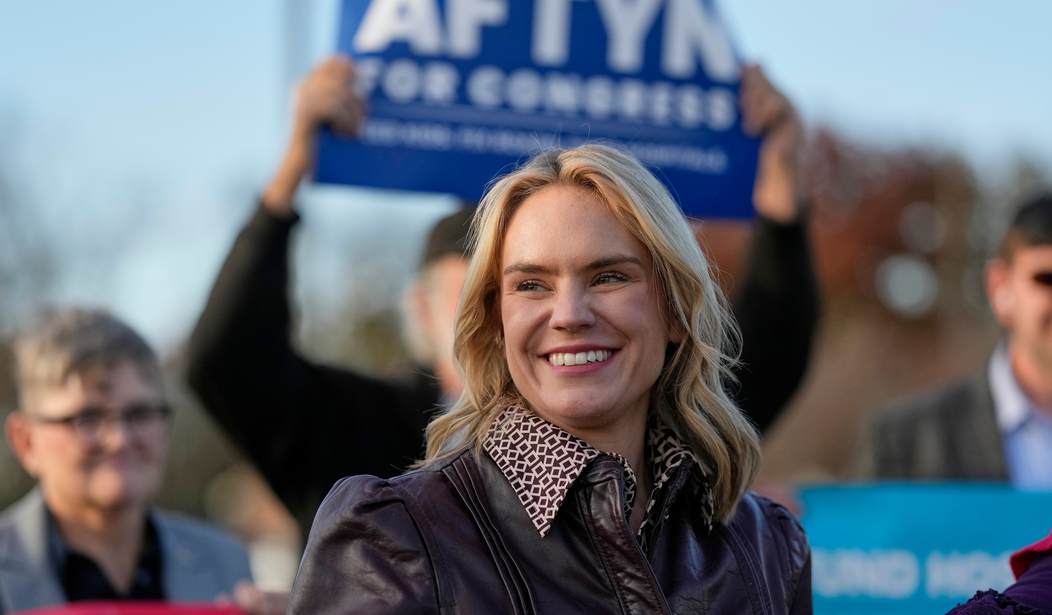
Aftyn Behn (D) lost tonight's special election in TN, but make no mistake: She’s the median Democrat, a lunatic radical progressive.
— Scott Jennings (@ScottJenningsKY) December 3, 2025
I wouldn't be surprised if Dems continue to run the most Cuckoo for Cocoa Puffs candidates they can find.
Is this really who we want running the… pic.twitter.com/oxYpbdtihz
What are you going to do with Gen Z? Poll by emoji on TikTok?
Trying to produce something that sounds scientific without advertising that the data you start out with is massaged to the point of bruising is borderline deceptive. Especially so when the incentive to get it right is extremely low, as is the case with "public" polls. Public pollsters are paid to produce fodder for news stories and for politicos to talk about, and the more "surprising" or "interesting" the results are, the more valuable they are.
Remember how the Harris campaign admitted that their private polls never showed Harris winning, even as public polls suggested she would? That's the difference between polling to get results as accurate as possible and polling to get results that aim either at what you want the public to think is true or to provide fodder to make covering the horse race interesting.
It is manifestly true that some pollsters are better at modeling the populace than others, which is why there are private pollsters who get paid big bucks for private results, but it is also true that even the best pollsters are placing bets that their models reflect an ever-changing reality.
In my experience, which admittedly is limited, the most useful polling for a campaign is issue polling, because precise numbers are not the point. You get a sense of relative weights, what motivates people, and you can get a better grasp on what you should discuss and how. Even then, the utility is less than you would like. Ask Donald Trump about whether he poll-tests his messaging.
Public polls are proving to be increasingly useless for anybody but a talking head, giving him something to spout off about. People still like to watch, and you can get some sense of how things are moving by watching a bunch of polls. But if you want to use them to predict things, they can be worse than useless because one is building not on bedrock, but on quicksand.
Did the Democrats believe that Behn might have won? Probably some of the ones who are moved by feelz. And probably not the ones who understand data.
I'd insert a warning here to ignore public polls because they are garbage, but what's the point? I will watch them. You will watch them. We will all talk about them, regardless of the fact that they are garbage.
So instead, I will just say: assume that polls are for entertainment purposes only.
Editor’s Note: Every single day, here at Hot Air, we will stand up and FIGHT, FIGHT, FIGHT against the radical left and deliver the conservative reporting our readers deserve.
Help us continue to point, laugh, and expose the idiocy of progressive elites. Join Hot Air VIP and use promo code FIGHT to get 60% off your membership!






Join the conversation as a VIP Member